
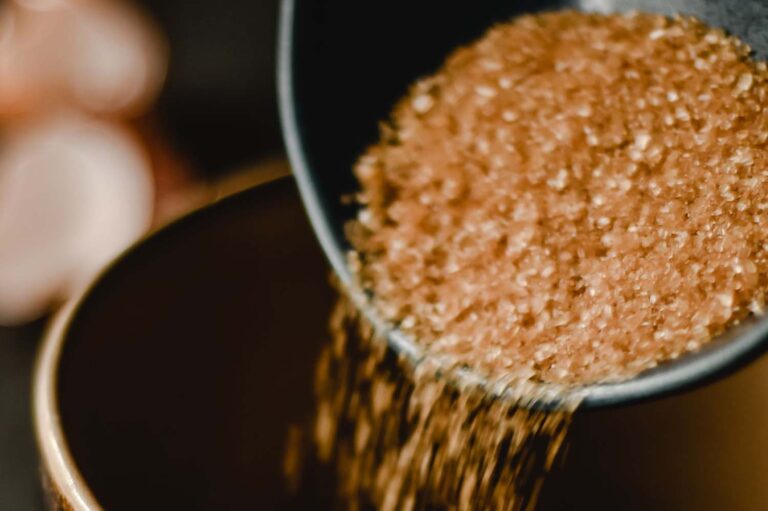
It’s an easy assumption to make: brown sugar feels different from white sugar, a little damp and sticky, so it seems reasonable that it might belong in the fridge like other opened pantry items. It’s also exactly backward, and refrigerating brown sugar is one of the most common ways people accidentally turn a soft, scoopable bag, the kind you’d want on hand for a sauce like the one that makes Teriyaki Pork Bowls work, into a solid brick.
Should brown sugar be refrigerated?
The short answer: No. Brown sugar should be stored at room temperature in an airtight container, not in the refrigerator. Refrigerators are actively dehumidifying environments, and that dry air pulls moisture out of brown sugar’s molasses coating faster than a cool, sealed pantry container would, which is exactly the opposite of what you want. The one cold-storage exception is the freezer: stored in a truly airtight container or heavy-duty bag, freezing brown sugar can actually help preserve its texture rather than ruin it, since it’s cold enough to slow moisture loss almost to a stop rather than accelerating it the way a fridge does.
For the full picture on shelf life and how to fix brown sugar that’s already hardened, see the companion guide to whether brown sugar goes bad, and for how it compares to other sugars, see whether white sugar goes bad and whether powdered sugar goes bad.
📋 Should Brown Sugar Be Refrigerated: At a Glance
| Refrigerator | No; dry fridge air pulls moisture out and speeds up hardening |
| Room temperature, airtight container | Yes; this is the correct everyday storage method |
| Freezer, airtight container or heavy-duty bag | Yes, and it can genuinely help; cold enough to slow moisture loss |
| Why it hardens | Molasses is hygroscopic; exposure to dry air evaporates its moisture |
| If it’s already hard | Not spoiled; add moisture back (damp towel, bread slice, terracotta disk) |
| Best container | Hard-sided, airtight, with a tight or gasket seal, not the original paper bag |
Key Takeaways
- Refrigerators are built to actively remove moisture from the air inside them, which makes them one of the worst places to store something that depends on retaining moisture, like brown sugar.
- Brown sugar’s softness comes from molasses, and molasses is hygroscopic, meaning it constantly exchanges moisture with the air around it rather than holding it in place.
- The freezer behaves differently from the refrigerator here; sealed tightly, a freezer’s extreme cold slows moisture loss almost entirely rather than accelerating it.
- An airtight, hard-sided container at room temperature does more to keep brown sugar soft than any amount of refrigeration ever will.
- Hardened brown sugar isn’t spoiled, and refrigerating it won’t fix that hardness; it will only make it worse over time.
Why the Fridge Is Uniquely Bad for Brown Sugar
The Science: Refrigerators Are Built to Dry the Air Out
It seems intuitive that a cold, enclosed space would be a humid one, but refrigerators work the opposite way. A refrigerator cools by pulling air from inside the compartment and passing it over a set of evaporator coils that sit well below the air’s dew point. As that air moves across the cold coils, the moisture it’s carrying condenses onto the metal and drains away, and the drier air that gets recirculated back into the fridge is what actually keeps your food cold. This matters most for anything not in a genuinely airtight container, since a well-sealed container limits how much dry fridge air ever reaches the sugar directly. But even with a good seal, moving a cold container repeatedly between the fridge and a warmer kitchen causes its own problem: condensation forms on the sugar and the inside of the container each time it’s opened into warmer, more humid air, since cold surfaces attract moisture the same way a cold glass of water sweats on a summer day. Utah State University Extension advises storing sugar in a cool, dry location rather than the refrigerator specifically because moisture is what makes granulated and brown sugar hard and lumpy, noting separately that brown sugar’s natural moisture content already makes it less stable for long-term storage than white sugar. Brown sugar’s soft texture comes from molasses, a thick, sugarcane-derived syrup that coats the sugar crystals and is naturally hygroscopic, meaning it readily gives up or absorbs moisture depending on what’s around it, which is exactly why both the dry recirculating air and the repeated condensation cycle work against it in a refrigerator.
What to Do Instead: Airtight, Room Temperature, or Frozen
Room temperature, airtight: This is the standard, correct way to store brown sugar day to day. A container with a tight or gasket seal, glass, ceramic, or heavy plastic, keeps outside air from reaching the sugar in the first place, which does more to prevent hardening than any temperature adjustment could. The original paper bag it comes in is not airtight and shouldn’t be relied on for long-term storage once it’s been opened. It’s worth having a properly stored, scoopable batch on hand for more than baking, too; the glaze on a Classic Meatloaf depends on brown sugar caramelizing evenly in the oven, which is much easier with sugar that isn’t fighting you as a solid clump.

Freezer, tightly sealed: This is the one cold-storage method that actually works in brown sugar’s favor. A freezer’s temperature is cold enough to slow the movement of moisture almost to a standstill, rather than actively pulling it out the way a refrigerator does. Stored in a truly airtight container or a heavy-duty freezer bag with the air pressed out, brown sugar can keep its texture in the freezer for a long time. Let it sit at room temperature for a few minutes before scooping, since it will be firmer straight from the freezer.
Tip: A damp paper towel does the same job in reverse
If brown sugar has already hardened, sealing it in a container with a slightly damp paper towel, a slice of bread, or a soaked terracotta disk (not touching the sugar directly) works because it reverses the same moisture exchange that caused the problem. The dry, hardened sugar draws moisture from whatever damp source is nearby until it softens again, typically within a day. It’s a slower fix than the oven or microwave, but it needs no special equipment beyond a container with a lid, and it’s worth doing before you need soft brown sugar for something like the caramelized topping on Cinnamon Pecan Crunch Banana Bread, rather than discovering the clump mid-recipe.
Frequently Asked Questions
No. Refrigerators actively remove moisture from the air inside them, which speeds up the hardening that already happens to brown sugar over time. An airtight container at room temperature is the correct way to store it.
Refrigerators cool by passing air over coils that are colder than the air’s dew point, which causes the moisture in that air to condense on the coils and drain away, leaving drier air recirculating inside. On top of that, repeatedly moving a container between the cold fridge and a warmer kitchen causes condensation to form each time it’s opened. Both effects work against brown sugar, whose softness depends on the moisture in its molasses coating, which is why Utah State University Extension recommends cool, dry, room-temperature storage over refrigeration even when a container is well sealed.
Yes, and unlike refrigeration, freezing can genuinely help preserve brown sugar’s texture. Stored in an airtight container or heavy-duty freezer bag, the freezer’s extreme cold slows moisture loss almost completely, which is the opposite effect refrigeration has. Let it sit at room temperature briefly before using.
Yes. Hardening is a texture change caused by moisture loss, not spoilage, and hard brown sugar is just as safe to eat as soft brown sugar. It’s simply difficult to measure and mix, which is why most people soften it before using it rather than eating it as a solid block.
A hard-sided container with a tight or gasket seal, whether glass, ceramic, or food-grade plastic, works best. The goal is minimizing air exchange with the sugar, since exposure to air is what allows the molasses coating to lose moisture in the first place. The original paper packaging isn’t airtight enough for long-term storage.
It can contribute to it indirectly, though hardening from dryness is the far more common outcome. If moist brown sugar is sealed tightly and then moved between a cold fridge and a warm kitchen repeatedly, condensation can form inside the container, and that added moisture occasionally creates conditions where mold can develop, particularly in a container that isn’t fully airtight.
It’s a reasonable habit carried over from other pantry staples, since many condiments and opened jars do call for refrigeration after opening. Brown sugar looks and feels different from dry, granulated white sugar, which makes the instinct to treat it more like a perishable item understandable, even though its low moisture content and high sugar concentration mean it doesn’t need cold storage the way a jar of mustard or an opened bottle of sauce does.
Stored properly in an airtight container, brown sugar has an extremely long shelf life and doesn’t spoil in any food safety sense, though most manufacturers suggest using it within about two years for best quality. For the full breakdown of shelf life and signs of actual spoilage, see the companion guide to whether brown sugar goes bad.
Both harden for the same underlying reason and both should be stored the same way, room temperature and airtight, never refrigerated. Dark brown sugar contains more molasses than light brown sugar, which can make it slightly more prone to noticeable moisture loss, but the storage advice itself doesn’t change between the two.
No, humid climates actually make an airtight container more important, not refrigeration. In a humid kitchen, brown sugar is at less risk of drying out but more at risk of clumping from ambient moisture, which an airtight, hard-sided container addresses directly. The refrigerator’s internal dehumidification still works against brown sugar regardless of how humid the room outside it is.
It won’t make it unsafe, but repeated refrigeration can make it progressively harder to work with, since each cycle of dry fridge air and warm kitchen condensation compounds the moisture loss and clumping. A brick of brown sugar can always be softened back to usable form, but skipping the fridge in the first place avoids the extra effort entirely.
Further Reading
- Does Brown Sugar Go Bad?
- Does Sugar Go Bad?
- Does Powdered Sugar Go Bad?
- Cinnamon Pecan Crunch Banana Bread
- Classic Meatloaf
- Teriyaki Pork Bowls
- Food Storage Guide

Better Living may earn commissions through affiliate links and may occasionally feature sponsored or partner content. If you make a purchase through our links, we may receive a small commission at no cost to you.