
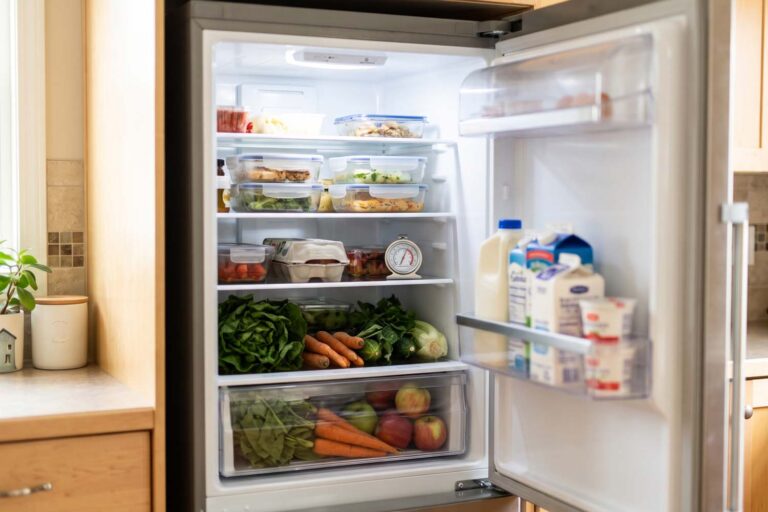
The kitchen mistakes that spoil food faster are mostly small habits: not knowing how cold your refrigerator really is, packing it too full, washing produce too early, or letting leftovers sit. Government agencies and university Extension programs have specific guidance on each one. Below are seven habits to change, what the experts say, and where we add our own practical notes.
Why food spoils faster in some kitchens
Food can lose quality through spoilage, and it can also carry harmful bacteria while looking and smelling normal, so appearance and smell alone cannot tell you whether it is safe. Spoiled food develops an off odor, flavor or texture because of naturally occurring spoilage bacteria, according to the USDA Food Safety and Inspection Service. Harmful bacteria can multiply rapidly in perishable food left at room temperature, which is why the FDA says to refrigerate perishables within 2 hours, or within 1 hour when the air is above 90°F, and why the USDA says leftovers left out longer should be thrown away. Oklahoma State University Extension also notes that moist foods tend to develop mold faster. Temperature, time and moisture are therefore the key storage factors, and each habit below changes at least one of them.
Seven habits that make food spoil faster
1Guessing your refrigerator temperature, and overpacking it
Fix: keep it at 40°F or below, verified with a thermometer. The FDA says to keep the refrigerator at 40°F or below and the freezer at 0°F, using a freestanding appliance thermometer in each, checked often. Texas A&M AgriLife Extension recommends an appliance thermometer at various points in the refrigerator, and says not to overload the refrigerator.
Our practical tip: leave gaps between items so air can move around them, and check the thermometer after you restock.
2Keeping dairy on the door
Fix: store dairy in the coldest part of the fridge. Texas A&M AgriLife Extension says dairy products belong in the coldest part of the refrigerator, never on the door.
Our practical note: the door opens every time you reach for something, so it tends to see more temperature swings than the shelves. The Extension guide does not give that reason, and refrigerator layouts vary, so check where the coldest zone is in yours.
3Washing produce before you store it
Fix: wash it just before you use it. Oklahoma State University Extension recommends washing fresh produce just before using it, not before storing it, because moist foods tend to develop mold faster. NDSU Extension agrees that rinsing fruits and vegetables just before eating gives the best quality and longest storage life. NDSU says to use plenty of running water and no soap, and to use a brush on netted-skin fruit such as cantaloupe. This is a general rule with exceptions. Texas A&M AgriLife Extension also says not to wash fruit before storing it because moisture encourages spoilage, but to rinse and drain leafy greens before refrigerating them, and the FDA produce guidance (July 2023) says produce labeled pre-washed can be used without further washing. If you wash produce ahead, dry it thoroughly with a clean towel before refrigerating it. See our guides to storing berries and storing lettuce.
4Storing ethylene producers next to sensitive produce
Fix: keep them apart. NDSU Extension says many fruits release ethylene gas naturally, which promotes ripening in fruit but can cause color changes or spoilage in ethylene-sensitive vegetables. It advises keeping fruits such as apples, pears and plums away from vegetables such as lettuce, carrots and broccoli. Oklahoma State University Extension names cucumbers, sweet potatoes, cauliflower and asparagus as sensitive. Our practical note: separation matters most for produce you plan to keep for several days. Storing them together briefly does not mean the food will spoil automatically. More in our guide to foods you should never store together and our posts on cucumbers and carrots.
5Letting food sit out or cool slowly
Fix: refrigerate within 2 hours, in shallow containers. The FDA says to refrigerate or freeze perishables within 2 hours (1 hour above 90°F) and to divide large amounts of leftovers into shallow containers to cool faster. The USDA adds that hot food can be placed directly in the refrigerator, so you do not need to wait for it to cool first (use shallow containers), and that a big pot of soup cools slowly and gives bacteria more time to multiply. Its page is from 2011, but the guidance is long-standing.
6Keeping leftovers too long, uncovered, in a dirty fridge
Fix: refrigerate leftovers promptly, keep them covered, and use them within 3 to 4 days. The USDA Food Safety and Inspection Service says to use leftovers within 3 to 4 days so mold does not have a chance to grow, and to keep food covered when serving to avoid mold spores in the air. That window assumes the food was refrigerated promptly and kept at 40°F or below. Leftovers that sat out beyond the 2-hour limit should be thrown away, even if they look and smell normal. The guide also says to clean the inside of the refrigerator every few months with 1 tablespoon of baking soda dissolved in a quart of water, explains that airborne spores spread mold from place to place, and warns not to sniff moldy food. It was revised in 2013. Our practical note: wipe up spills right away instead of waiting for the next big clean. See our leftovers guide.
7Storing pantry food near heat, open and out of order
Fix: cool, dry, dark and airtight, oldest first. Texas A&M AgriLife Extension says pantry storage should be dry, cool and dark, ideally 50 to 70°F, in the coolest cabinets away from the range, oven, water heater, dishwasher or hot pipes. It recommends airtight containers once packages are opened, and a first in, first out policy. Not every pantry food needs the same packaging, so follow the storage directions on the product where they differ. Kansas State University Extension (revised June 2026) says to store foods away from heat sources like appliances and the sun, and to check dates and use the oldest products first. See our expired pantry staples guide.
Quick checklist
- Put a thermometer in the fridge and check it after restocking.
- Move dairy off the door.
- Wash produce just before you use it (pre-washed packages need no rewash), and dry it well if you wash ahead.
- Separate apples, pears and plums from lettuce, carrots and broccoli.
- Divide leftovers into shallow containers and refrigerate within 2 hours.
- Label leftovers and finish them in 3 to 4 days.
- Move pantry staples away from the stove and into airtight containers.
For foods that spoil faster than people expect, see our guide to foods that spoil faster than you think, and for ones that keep longer, foods that last longer than you think. Some foods do better outside the cold, and we cover them in foods you should never refrigerate.
Food storage questions, answered
What temperature should a refrigerator be?
40°F or below, per the FDA. Texas A&M AgriLife Extension gives a range of 32 to 40°F. Use an appliance thermometer to check.
Should you wash produce before storing it?
Usually not. Oklahoma State University Extension recommends washing just before use because moist foods tend to develop mold faster.
Can you put hot food in the refrigerator?
Yes. The USDA says hot food can be placed directly in the refrigerator. Divide large amounts into shallow containers so it cools faster.

How long can leftovers stay in the fridge?
3 to 4 days if they were refrigerated promptly and kept at 40°F or below, per the USDA Food Safety and Inspection Service and the USDA.
Where should milk go in the refrigerator?
In the coldest part, not on the door, per Texas A&M AgriLife Extension.
Why do fruits and vegetables spoil faster together?
Many fruits release ethylene gas, which promotes ripening and can cause spoilage in ethylene-sensitive vegetables, per NDSU Extension.
Which fruits and vegetables should be stored at room temperature?
It depends on the produce and its ripeness. Kansas State University Extension says tomatoes should ripen at room temperature and be refrigerated when fully ripe or cut. Texas A&M says bananas stay out until ripened, then can be refrigerated. Potatoes and onions belong in a cool, dry, well-ventilated place, and Kansas State says not to refrigerate sweet potatoes. Apples keep about 3 weeks at room temperature and up to a month in the refrigerator, per Kansas State. Oklahoma State says berries, grapes and leafy vegetables belong in the refrigerator. Refrigerate cut produce promptly, per NDSU and the FDA.
How can you make food last longer?
Keep the refrigerator at 40°F or below, wash produce just before using it, separate ethylene producers from sensitive vegetables, refrigerate leftovers within 2 hours and use them in 3 to 4 days, and store pantry food cool, dry and airtight.
What is the best place to store pantry food?
A dry, cool, dark cabinet away from the stove and other heat sources, per Texas A&M AgriLife Extension and Kansas State University Extension.
The bottom line
Temperature, moisture, time and contact with other foods all affect how long food lasts. Check your fridge with a thermometer, give food room, wash produce late, separate ethylene producers, chill leftovers promptly and keep the pantry cool.

Better Living may earn commissions through affiliate links and may occasionally feature sponsored or partner content. If you make a purchase through our links, we may receive a small commission at no cost to you.