
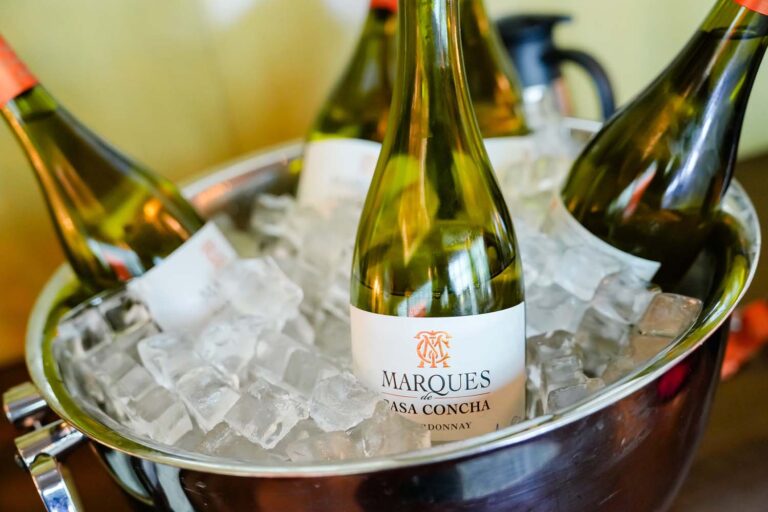
Most opened table wine belongs in the fridge, red included, but unopened wine usually doesn’t need it, and port and sherry follow their own rules. Red tastes best warmer than fridge cold, and white best a little cooler than a cellar. Below: what to chill, for how long, and what a kitchen fridge does to a bottle that stays too long.
Does wine need to be refrigerated?
The short answer: Opened table wine, yes, red included. Port and sherry vary by style. The Missouri Wine and Grape Board calls the fridge the best place for an opened bottle. Unopened wine, no. WSET prefers a cool, steady spot at 50 to 59°F, and a food fridge may be fine for a couple of months. Serve whites chilled, avoiding much below 43°F, and reds at about 59 to 64°F.
For a complete pantry storage reference, see our Food Storage Guide. More wine and bar guides live in our Bar & Spirits Guide.
📋 Does Wine Need to Be Refrigerated: At a Glance
| Unopened wine | Not required. A cool, steady 50 to 59°F spot is better (WSET). A food fridge may be fine for a couple of months (Missouri Wine and Grape Board) |
| Opened red | Yes. The Missouri board calls the fridge the best place for opened wine. We’d take red out 20 to 30 minutes before pouring |
| Opened white and rosé | Yes. WSET: up to 5 days re-closed in the fridge |
| Serving whites | Chilled, though WSET says below 43°F can mask flavors. Full-bodied whites 50 to 55°F. Champagne 46 to 50°F (Comité Champagne) |
| Serving reds | 59 to 64°F (15 to 18°C) per WSET |
| Long-term in the fridge | Avoid. A food fridge runs about 38°F, too cold for long-term storage (Paso Robles Alliance), and can dry out a cork |
| Hot home | Heat is the bigger risk: above 75°F greatly ages most wines (Purdue). For months, find a cool, dark spot |
| Sparkling and boxed | Fridge once opened. Sparkling about 1 to 3 days. Boxed 2 to 3 weeks (UF/IFAS) to 6 weeks (Black Box) |
Key Takeaways
- Most opened table wine belongs in the fridge, red included, because cooler temperatures slow oxidation. Port and sherry follow their own rules, covered below. The Missouri Wine and Grape Board calls it the best place for an opened bottle, and WSET’s up to five days applies to a re-closed red or white kept there.
- Unopened wine does not need the fridge. WSET prefers a cool, steady spot at 50 to 59°F, and the kitchen is a poor place for it.
- A food fridge is fine for a short stay. The Missouri board says it may be fine for a couple of months, but fridges can dry out corks, and the Paso Robles Alliance calls 38°F too cold for long-term storage.
- Red wine tastes best warmer than the fridge. WSET gives 59 to 64°F, and we’d take an opened red out 20 to 30 minutes before pouring.
- White, rosé and sparkling wine are best chilled. WSET says going below 43°F can mask flavors, which is a serving guideline, not a safety limit. The Comité Champagne gives 8 to 10°C for Champagne and suggests a few hours at the bottom of the fridge.
- In a hot home, heat is the bigger risk than the fridge for a short stay. Purdue Extension says above 75°F greatly ages most wines.
- Fridge cold can leave crystals. The Canadian Food Inspection Agency says wine diamonds pose no health risk and do not impact the taste of the wine.
- We found no FDA, USDA or university rule on refrigerating wine. The sources here are WSET, a university extension, state and regional wine boards, the Champagne and Sherry trade bodies and producers.
Unopened, opened, red, white, sparkling, fortified and boxed wine have different answers. For shelf life and spoilage signs, see whether wine goes bad. For the opened-bottle clock, see how long wine lasts after opening. Sparkling has its own guides on whether Champagne goes bad and whether Prosecco goes bad.
Which Wines Need the Fridge?
Start with what the bottle is doing. Opened and unopened, red and white, and sparkling and fortified wine have different answers.
| Wine | Fridge? | Source |
|---|---|---|
| Unopened still wine, short term | Not required. A cool, dark spot at 50 to 59°F is better. A food fridge may be fine for a couple of months | WSET, Missouri board |
| Unopened still wine, long term | No. A food fridge is too cold for long-term storage and can dry out the cork | Paso Robles Alliance, Missouri board, WSET |
| Unopened white, before serving | Yes, chill it. The Comité Champagne suggests a few hours at the bottom of the fridge for Champagne. Avoid going much below 43°F | WSET, Comité Champagne |
| Unopened red, before serving | Usually not. Serve at 59 to 64°F. Light, low-tannin reds can be served a little chilled | WSET |
| Opened red | Yes. We’d take it out 20 to 30 minutes before you pour again | Missouri board |
| Opened white or rosé | Yes. Up to 5 days re-closed per WSET | Missouri board, WSET |
| Opened sparkling | Yes, with a sparkling stopper. About 1 to 3 days | Producer guides, WSET |
| Opened fino or manzanilla sherry | Yes, keep it in the fridge at all times | Sherry council, Lustau |
| Opened port | White port yes, up to a month. Other port upright in a cool, dark place | Sandeman |
| Opened boxed wine | Yes. 2 to 3 weeks per UF/IFAS, up to 6 weeks per Black Box | UF/IFAS, Black Box |
Does Unopened Wine Need to Be Refrigerated?
No, unopened wine does not need to be refrigerated. WSET’s page on wine service and storage temperatures says a wine storage area should sit below room temperature, at 10 to 15°C (50 to 59°F). It names the kitchen among the worst spots, because the room sees large temperature swings. The Missouri Wine and Grape Board puts the ideal at 55°F.
Short stays at room temperature carry less risk than heat. We found no official figure for how long a bottle can sit out, and the Missouri board says wine kept above 68°F ages faster. Our guide on whether wine goes bad covers heat and spoilage signs.
Should Red Wine Be Refrigerated?
Opened red wine should go in the fridge, and unopened red doesn’t need to. The Missouri board calls the fridge the best place for opened wine, and WSET’s up to five days applies to a re-closed red as well as white.
Red is better served warmer than fridge temperature, so plan a few minutes. We’d take it out 20 to 30 minutes before pouring more. WSET gives 15 to 18°C (59 to 64°F) as the range for red, and says room temperature for wine is cooler than most people think.
Some reds are made to be served cooler. WSET’s wine myths article says the best reds to try chilled are usually light- to medium-bodied with low levels of tannins. WSET adds that reds served too cold may taste thin and harsh.
Should White Wine Be Refrigerated?
Opened white and rosé belong in the fridge, and so do unopened bottles you plan to serve. WSET says light and medium-bodied whites benefit from being served a little colder than full-bodied whites, which it says need only a light chill, around 10 to 13°C (50 to 55°F). We found no official range for rosé or light whites beyond WSET’s floor, and for Champagne the Comité gives 8 to 10°C.
Don’t over-chill. WSET says going below 6°C (43°F) can mask the flavors in white, rosé and sparkling wines. We’d take the bottle out of the fridge a few minutes before serving. That is a flavor guideline, not a spoilage or safety limit.
| Wine | Serve at | Source |
|---|---|---|
| Light and medium-bodied whites, rosé | A little colder than full-bodied whites. Below 6°C (43°F) can mask flavors | WSET |
| Full-bodied whites | 10 to 13°C (50 to 55°F) | WSET |
| Champagne | 8 to 10°C (about 46 to 50°F) | Comité Champagne |
| Red wine | 15 to 18°C (59 to 64°F) | WSET |
| Fino and manzanilla sherry | 5 to 7°C (41 to 45°F) | Sherry council |
| White port | 6 to 10°C (43 to 50°F) | Sandeman |
| Tawny port | 12 to 16°C (54 to 61°F) | Sandeman |
| Ruby port | 16 to 18°C (61 to 64°F) | Sandeman |
| Over-chilled white, rosé or sparkling | Below 6°C (43°F) can mask flavors | WSET |
Can You Store Unopened Wine in the Refrigerator Long Term?
Avoid the kitchen fridge for long-term storage. The Paso Robles Wine Country Alliance says a standard food refrigerator runs around 38°F, which is too cold for long-term wine storage. It says a fridge is acceptable for a bottle you plan to open within a day or two. The Missouri board’s earlier tips page says an average fridge removes humidity as it cools and can dry out a cork, though it adds that a fridge may be fine for a couple of months.
WSET warns that corks can lose their elasticity and become hard if wine stays in the fridge too long. A dry cork lets air in, which is the same oxygen problem that fades an opened bottle. Past a couple of months, we’d move the bottle to a cool, dark cupboard away from the stove.
Our rule of thumb from these sources: for hours to a few days, the fridge is fine for chilling a bottle or keeping an opened one. For several weeks, a food fridge can be a practical short-term choice, especially in a warm home. For long-term storage, a cool, dark spot at 50 to 59°F is better. The couple-of-months figure is one wine board’s guidance, not a universal cutoff.
Should You Refrigerate Wine in a Hot Home?
If your home runs warm, heat is the bigger risk than the fridge for a short stay. Purdue Extension’s wine storage sheet says temperatures above 75°F greatly age most wines, and the Missouri board says wine kept above 68°F ages faster than wine stored correctly. A food fridge runs near 38°F, per the Paso Robles Alliance, and its main risk is a dried-out cork after months, per WSET and the Missouri board.
We found no official guidance on this exact question. For a few weeks in a hot room we’d use the fridge, and for months we’d find a cooler, darker spot.
Is a Wine Cooler Better Than a Refrigerator?
A wine cooler is designed to hold wine at a steady temperature, and a food fridge is not. We found no education body or agency that compares the two. The Paso Robles Alliance puts the ideal at 55°F with humidity of 60 to 80%, against a food fridge near 38°F, and the Missouri board says a fridge strips humidity.
If you shop for a cooler, we’d check that it holds a steady temperature near those targets, since makers’ specs vary. Without one, we’d use a cool, dark cupboard away from the stove for months of storage, based on WSET and the Missouri board.
How Do You Chill Wine Fast?
The fridge is the easy way to chill, and ice water is the fast way. WSET says an ice bucket should be three-quarters filled with equal quantities of ice and water, and that a bottle in ice alone chills very slowly until some of the ice has melted. The Comité Champagne, the Champagne trade body, gives about 8 to 10°C (roughly 46 to 50°F) as ideal for Champagne. It suggests the bottom of the fridge a few hours before opening, or an ice bucket half filled with water and ice for 20 to 30 minutes.
We found no official chill time for still wine, so we’d plan on a few hours in the fridge for a white, as the Comité does for Champagne. We found no source on chilling wine in the freezer. Our guide on whether wine goes bad covers what freezing does to a bottle, which can leak, push out the cork or crack as the wine expands. If you use the freezer, we’d set a timer.
Does Cold Hurt Wine?
Cold doesn’t hurt wine, but it can show up in the glass. The Canadian Food Inspection Agency says wine diamonds can form when wine is exposed to temperatures below 4°C (about 39°F), as potassium and tartaric acid from the grapes bind together. A food fridge runs near 38°F, so a fridge can trigger them. The agency says they pose no health risk and do not impact the taste of the wine, though they may leave a slight gritty texture on the tongue. Iowa State Extension’s tartrate crystal page calls them not harmful but possibly a visual defect.
Over-chilling is the real cost. WSET describes muted flavors in a white and a thin, harsh red. Let the bottle warm for a few minutes.
Do Sparkling, Fortified and Boxed Wines Need the Fridge?
Sparkling wine should be chilled before opening and refrigerated after, under a stopper. Producer guidance in our guides is about one to three days, and WSET says up to five. See whether Champagne goes bad and whether Prosecco goes bad.
Fortified wine varies. The Sherry regulatory council’s conservation guide says finos and manzanillas should always be kept in the fridge, and its open-bottle periods assume other sherry is tightly corked in the fridge too. Lustau’s advice page says to keep sherry in the fridge once it is open. Sandeman’s guide to drinking port puts only white port in the fridge, for up to a month, and says to store other opened port upright in a cool, dark place. It gives ruby about a month, tawny 2 to 3 months and vintage port 2 to 3 days. Vermouth has its own guide on whether vermouth goes bad.
Boxed wine goes in the fridge once opened. Black Box’s boxed wine storage page says it stays fresh for up to six weeks and that refrigerating it is best. UF/IFAS’s publication on wine packaging gives two to three weeks for newer bag-in-box designs. Cooking wine is a different product, covered in whether cooking wine goes bad and whether cooking wine needs to be refrigerated.
Does Opened Wine Go Bad If You Don’t Refrigerate It?
Opened wine fades faster warm than cold. WSET’s faults guide lists an opened bottle left for a number of days as a cause of oxidation. The Missouri board says the fridge’s temperature slows the aging and oxidation process. We found no source on how many hours an opened bottle can sit out.
We’d re-close it and refrigerate it the same evening. If a bottle sat out overnight, check the smell and color before you use it. Our guide on how long wine lasts after opening has the day-by-day chart.
Chilling Wine for a Party
Hosting? Plan the chill ahead. Whites need a few hours in the fridge (the Comité Champagne’s figure for Champagne), and reds just a short rest or none. WSET’s ice-water bucket method helps if you’re short on time. Our Thanksgiving wine pairing guide covers what to pour. Bringing a bottle? See the best wine for gift giving.
Signs Something Is Wrong
- A hard, dried-out cork after a long stay in the fridge. WSET and the Missouri board both warn about it.
- A cork pushed out of the neck. WSET ties it to heat.
- A vinegar or nail polish smell. WSET ties this to volatile acidity.
- A brown tinge with bruised apple, nut or honey smells. WSET ties this to too much oxygen.
- Mold. We’d skip the bottle.
These follow WSET and the Missouri board, and we found no agency checklist. We don’t suggest tasting to test.
Normal Things That Aren’t a Problem
- Small crystals in a chilled bottle. The Canadian Food Inspection Agency says wine diamonds pose no health risk and do not impact taste.
- A red that feels cold from the fridge. We’d give it 20 to 30 minutes.
- A short stay in the fridge. The Missouri board says a fridge may be fine for a couple of months.
Quick Storage Reference
- Unopened: Cool, steady, dark. 50 to 59°F (WSET) or 55°F (Missouri board).
- Food fridge, unopened: A few weeks to a couple of months at most. Longer risks a dry cork.
- Opened: Re-close and refrigerate. Red out 20 to 30 minutes before pouring.
- Serving: Whites chilled and avoiding much below 43°F, full-bodied whites 50 to 55°F, reds 59 to 64°F (all WSET).
- Sparkling and boxed: Fridge after opening.
- Avoid: A full bottle in the freezer without a timer.
| Situation | What to Do |
|---|---|
| Unopened red, bought today for dinner tonight | Fine at room temperature. Serve at 59 to 64°F, or chill a light, low-tannin red briefly. |
| Unopened white, dinner in two hours | Put it in the fridge now, and use an ice-water bucket if you’re short on time. We found no official chill time for still wine. |
| Unopened bottle in the kitchen fridge for 3 weeks | Within the couple of months the Missouri board says may be fine. Move it to a cooler cupboard if it will sit longer. |
| Unopened bottle in the kitchen fridge for 8 months | Past the couple of months. The Paso Robles Alliance calls a food fridge too cold for long-term storage, and the Missouri board says it can dry out the cork. Check the cork and move the bottle to a cooler cupboard now. |
| Unopened red in a hot apartment for 2 weeks | We’d use the fridge. Purdue Extension says above 75°F greatly ages most wines. Pull the bottle out 20 to 30 minutes before you serve it, and find a cooler spot for longer stays. |
| Opened red, on the counter overnight | Re-close and refrigerate now. We found no source on hours, and cold slows oxidation. |
| Opened red, in the fridge for 4 days | Within WSET’s up to five days. Smell it first. |
| Red straight from the fridge | Fine. Give it 20 to 30 minutes before you pour. |
| White that’s too cold to taste anything | Fine. Take it out a few minutes before serving. WSET says going below 43°F can mask flavors. |
| Crystals at the bottom of a chilled bottle | Fine. The Canadian Food Inspection Agency says wine diamonds pose no health risk and do not impact taste. |
| Opened fino sherry | Keep it in the fridge. The Sherry regulatory council says always. |
| Opened boxed wine | Fridge. Within the two to three weeks UF/IFAS gives for newer designs, and within Black Box’s up to six. |
In October 2026 we read WSET’s guides on wine service and storage temperatures, wine myths and keeping wine fresh. We read the Missouri Wine and Grape Board’s two storage pages, the Paso Robles Wine Country Alliance’s storage guide (July 2026), Purdue Extension’s wine storage guidelines (marked 03/10) and UF/IFAS’s 2024 publication on wine packaging. We read the Comité Champagne’s pages on cooling Champagne. We read the Canadian Food Inspection Agency’s wine diamonds fact sheet and Iowa State Extension’s tartrate crystal page. We read the Sherry regulatory council’s conservation guide, Lustau’s advice page, Sandeman’s port guide and Black Box’s boxed wine page. We found no FDA, USDA or university rule on refrigerating wine. Where we found no source we say so, and our own suggestions say we’d or we suggest. This article is general information, not medical advice.
Does Wine Need to Be Refrigerated FAQ
Should red wine be refrigerated?
After opening, yes. The Missouri board calls the fridge the best place for an opened bottle, and WSET’s up to five days applies to red as well as white. Unopened red doesn’t need it, and WSET gives 59 to 64°F as the range for serving red.
Does red wine need to be refrigerated after opening?
Yes. The Missouri board calls the fridge the best place for an opened bottle, and WSET’s up to five days is for a re-closed bottle in the fridge. We’d take a red out 20 to 30 minutes before pouring.
Is it OK to keep red wine in the fridge?
Yes, for a short stay. The Missouri board says a fridge may be fine for a couple of months, though the Paso Robles Alliance calls a food fridge too cold for long-term storage.
Should red wine be chilled before drinking?
Usually only a little. WSET says full-bodied reds should be served at room temperature, which it puts at 59 to 64°F. Light to medium-bodied reds with low tannins are the best ones to try chilled.
Does white wine need to be refrigerated?
Opened white does, and unopened white should be chilled before serving. WSET says below 43°F can mask flavors, and the Comité Champagne suggests a few hours at the bottom of the fridge for Champagne.
Does unopened wine need to be refrigerated?
No. WSET prefers a cool, steady spot at 50 to 59°F, and the Missouri board puts the ideal at 55°F. A food fridge may be fine for a couple of months.

Can you store wine in the fridge long term?
We’d avoid it. The Paso Robles Alliance calls a food fridge at about 38°F too cold for long-term storage, and the Missouri board says it can dry out a cork.
How long can unopened wine stay in the fridge?
The Missouri board says a fridge may be fine for a couple of months. WSET warns that corks can lose their elasticity and become hard if wine stays in the fridge too long.
Should you refrigerate wine in summer or a hot home?
For a short stay, we’d use the fridge. Purdue Extension says above 75°F greatly ages most wines, and the Missouri board says above 68°F ages wine faster. We found no official guidance on this exact question.
Does wine go bad if not refrigerated?
Unopened wine doesn’t need the fridge. An opened bottle fades faster warm, because cold slows oxidation. See how long wine lasts after opening for the timeline.
How long can wine sit out?
Unopened, we found no official figure, and the Missouri board says wine kept above 68°F ages faster. Opened, we found no source giving hours. We’d refrigerate it the same evening.
How cold should wine be?
WSET gives 10 to 13°C (50 to 55°F) for full-bodied whites and 15 to 18°C (59 to 64°F) for red, and says going below 6°C (43°F) can mask flavors in white, rosé and sparkling. The Comité Champagne gives 8 to 10°C for Champagne.
How long does it take to chill white wine?
We found no official time for still wine. The Comité Champagne suggests a few hours at the bottom of the fridge for Champagne, or 20 to 30 minutes in a bucket of ice and water.
How long does it take to chill red wine?
We found no official time. WSET says light to medium-bodied reds with low tannins are the best to chill, and describes an ice bucket as three-quarters ice and water in equal parts. We’d start with 20 to 30 minutes and check.
Can you chill wine in the freezer?
We found no source that recommends it. A full bottle can leak, push out the cork or crack as it freezes, so we’d set a timer.
Is it bad to chill red wine?
Not necessarily. WSET says the best reds to try chilled are usually light- to medium-bodied with low tannins, and that reds served too cold may taste thin and harsh.
Why are there crystals in my chilled wine?
Tartrate crystals, also called wine diamonds. The Canadian Food Inspection Agency says they can form below 4°C (about 39°F), do not impact taste and pose no health risk, though they may feel slightly gritty.
Is a wine fridge better than a regular fridge?
For storage, a wine cooler is designed to hold wine at a steady temperature. We found no education body comparing them. The Paso Robles Alliance puts the ideal at 55°F, and a food fridge runs near 38°F.
Does Champagne or sparkling wine need to be refrigerated?
Chill it before opening and refrigerate it after, under a stopper made for sparkling wine. The Comité Champagne gives about 8 to 10°C for Champagne. See whether Champagne goes bad and whether Prosecco goes bad.
Does port need to be refrigerated?
Only white port, per Sandeman, which says it lasts up to a month in the fridge. For other opened port Sandeman says to store it upright in a cool, dark place, and tawny lasts 2 to 3 months.
Does sherry need to be refrigerated?
Fino and manzanilla, yes, always after opening, per the Sherry regulatory council. Lustau says to keep sherry in the fridge once it is open.
Does boxed wine need to be refrigerated?
Once opened, yes. Black Box says refrigerating it is best and it stays fresh up to six weeks. UF/IFAS gives two to three weeks for newer designs.
Does vermouth need to be refrigerated?
It has its own guide. See whether vermouth goes bad.
Does cooking wine need to be refrigerated?
Cooking wine is a different product. See whether cooking wine needs to be refrigerated and whether cooking wine goes bad.
Does rosé need to be refrigerated?
Opened, yes. WSET groups rosé with white and sparkling wine as best served chilled, and says below 6°C (43°F) can mask flavors.
Hosting a dinner or holiday?
Chill whites a few hours ahead and let reds rest briefly. Our Thanksgiving wine pairing guide covers what to pour.
Further Reading

Better Living may earn commissions through affiliate links and may occasionally feature sponsored or partner content. If you make a purchase through our links, we may receive a small commission at no cost to you.