
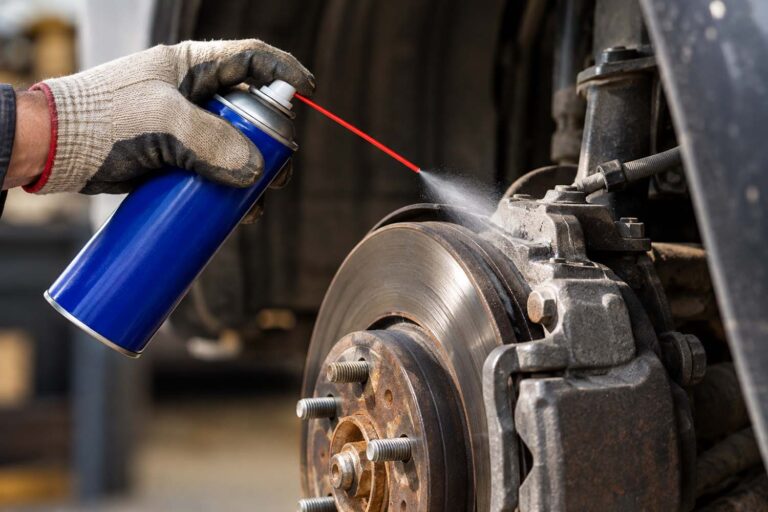
You’ve got a can of WD-40 sitting in the garage that’s older than your car’s last oil change. Maybe the nozzle is a little crusty. Maybe it sprayed fine last time but feels lighter than it should. Does WD-40 go bad?
The short answer: Not really, but the can does have a practical shelf life. WD-40 states an official shelf life of 5 years from the date of production, mostly for liability reasons. The formula itself is a petroleum-based blend designed to last almost indefinitely. What actually fails over time is the can: the propellant can leak out, the valve can weaken, and the oil can evaporate if the seal isn’t tight. A well-sealed can stored at a reasonable temperature will almost always outlast its official date.
If you’re doing a broader check of what’s worth keeping in the garage, our guide on simple observations that help catch problems in your house is a good place to start.
Key Takeaways
- Official shelf life: 5 years from date of production, per WD-40’s own labeling.
- Realistic shelf life: Often well beyond 5 years if the can is sealed and stored properly. The formula itself doesn’t chemically expire.
- What actually fails: The aerosol delivery system, not the oil. A weak or clogged valve, a dented can, or a missing cap lets propellant escape.
- Storage range: 39°F to 129°F (4°C to 54°C). Outside that range, risk of pressure loss or fire hazard increases.
- Rusted, dented, or bulging cans should be discarded, not used. A bulging can is a pressure hazard.
- Non-aerosol WD-40 (trigger bottles, bulk containers) behaves differently since there’s no propellant to lose, but the oil can still separate or thicken with age.
Why WD-40’s Shelf Life Isn’t About the Formula
Most products that “go bad” do so because something inside them chemically breaks down, ferments, or grows mold. WD-40 is different. According to WD-40 Company’s own FAQ, the compound inside the can can evaporate under certain conditions, and it can even dissipate to the point where it won’t dispense properly, but this is a mechanical and storage issue rather than the oil itself spoiling.
What’s Really Happening Inside the Can
An aerosol can of WD-40 holds two things: the oil-based formula and a pressurized propellant that pushes it out through the nozzle. WD-40 Company’s own materials describe the product as continuing to perform for an almost indefinite period under good storage, with the 5-year figure existing mainly as a formal shelf-life claim rather than a hard cutoff.
The real vulnerability is the seal. If the cap is left off, if the nozzle straw isn’t removed and the cap replaced after use, or if the can develops even a tiny leak, propellant escapes over time. Once enough pressure is lost, the can either sprays weakly or stops dispensing altogether, even though the oil inside may still be perfectly usable.
Temperature matters more than age. The company recommends storing cans between 39°F and 129°F. Extreme heat increases internal pressure and fire risk in an aerosol can; extreme cold can affect how well the product sprays.
Signs Your WD-40 Has Actually Gone Bad
When to Replace the Can
Weak or no spray: If you press the nozzle and get nothing, or just a faint hiss, the propellant has likely leaked out. This is the most common way WD-40 “expires” in practice.
Rust on the can: Surface rust on an old can is a sign it’s been stored somewhere damp. Rust can eventually compromise the can’s integrity.
Dents or bulging: A dented aerosol can is a safety risk since it can weaken the container under pressure. A bulging can means internal pressure has built up abnormally, often from heat exposure. Discard bulging cans without attempting to use them, and don’t puncture them.
Separated or discolored oil (non-aerosol only): In trigger-spray or bulk bottles without propellant, the oil can occasionally separate or develop an off smell after years of storage. This doesn’t happen in a properly sealed aerosol can.
How to Store WD-40 So It Lasts
Storage Best Practices
Keep the cap on. This is the single biggest factor. A secured cap maintains the pressurized seal that keeps propellant from slowly escaping.
Remove the straw nozzle after each use if your can uses the detachable red straw, and snap the regular cap back on. Leaving the straw attached without the cap is a slow leak waiting to happen.
Store upright in a cool, dry place, ideally between 39°F and 129°F. A garage shelf away from direct sun or a furnace is ideal; the trunk of a car in summer heat is not.
Keep it away from ignition sources. WD-40 is flammable in aerosol form, and the company specifically warns against storing it near heat sources due to fire risk. Keep it away from water heaters, furnaces, and anything with a pilot light. See our home fire prevention tips for more on safely storing flammable household products.

Check the can periodically if it’s been sitting for years. A quick test spray tells you everything you need to know about whether it still has pressure.
How to Dispose of an Old or Empty Can Safely
An aerosol can that’s completely empty of both product and propellant can typically go in household recycling in most areas, since scrap metal recyclers generally accept empty aerosol cans. A can that still has product or pressure left in it is a different matter: don’t puncture it, don’t incinerate it, and don’t toss it in regular trash if it’s still under pressure. Most municipalities treat pressurized cans with remaining contents as household hazardous waste. If you’re not sure whether a can is fully empty, spray it in a well-ventilated area until nothing more comes out, then check your local hazardous waste or recycling guidelines, since rules vary by city and state.
Frequently Asked Questions
Does WD-40 expire?
Not in the way food or medicine expires. The official shelf life is 5 years from the production date, but that’s largely a liability figure. The formula is designed to perform for an almost indefinite period, and cans stored properly often work well past their date. What fails first is usually the can’s ability to hold pressure, not the oil itself.
My WD-40 can won’t spray anymore. Is it bad?
Most likely the propellant has leaked out over time, often because the cap was left off or the nozzle straw was left attached without the cap after use. The oil inside may still be fine, but without pressure it can’t dispense. There’s no safe way to refill or re-pressurize a household can, so replace it.
Is it safe to use a 10-year-old can of WD-40?
If the can isn’t rusted, dented, or bulging, and it still sprays normally, it’s generally fine to use. Do a quick test spray first. If it sprays weakly, sputters, or the can shows any damage, replace it rather than force it.
Further Reading
- Does Rubbing Alcohol Go Bad?
- Does Hydrogen Peroxide Go Bad?
- Do Batteries Go Bad?
- Home Fire Prevention Tips

Better Living may earn commissions through affiliate links and may occasionally feature sponsored or partner content. If you make a purchase through our links, we may receive a small commission at no cost to you.