
🌶️ The Short Answer
Does sriracha go bad? Yes, but very slowly, and almost never in a way that makes it unsafe to eat.
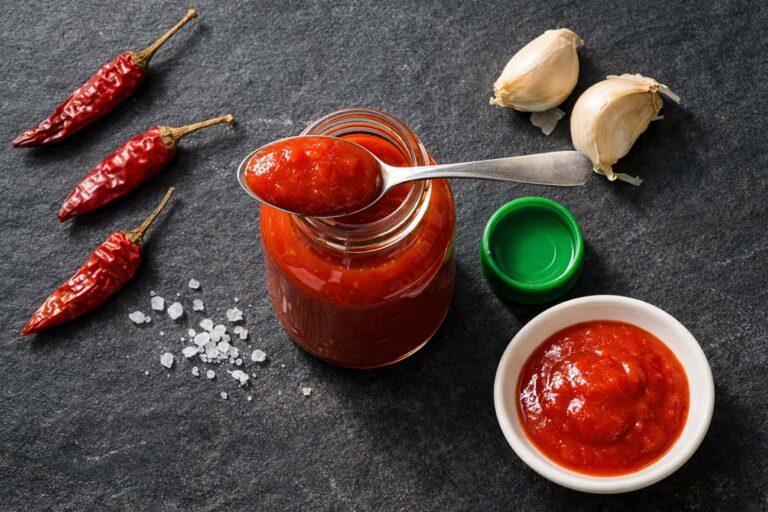
Sriracha is built to last. Its main ingredients (chili peppers, distilled vinegar, salt, and garlic) are all natural preservatives, and commercial brands like Huy Fong add potassium sorbate and sodium bisulfite on top of that. The result is one of the most shelf-stable condiments in your kitchen.
What actually happens over time is quality decline, not spoilage. The color shifts from bright red toward a darker brownish-red. The heat level changes, and not in the direction most people expect. The bigger concern is knowing the difference between a bottle that’s genuinely gone bad versus one that’s just aged normally.
📅 Sriracha Shelf Life at a Glance
| Condition | Pantry | Refrigerator |
|---|---|---|
| Unopened (commercial) | 2+ years | Indefinite |
| Opened (commercial) | 6–9 months (best quality) | 12–18 months |
| Past best-by date (unopened) | Often fine 6–12 months beyond | — |
| Homemade sriracha (opened) | Not recommended | 1–3 months |
| Sriracha mayo or mixed sauces | Not safe | 3–5 days only |
These figures apply to Huy Fong and comparable commercial brands. The 6–9 month pantry window is Huy Fong’s own recommendation for best flavor — the sauce won’t suddenly become unsafe the day it hits month 10, but quality will be noticeably different.
🔬 Why Sriracha Lasts So Long
Three things work together to make sriracha exceptionally shelf-stable:
Distilled vinegar. Vinegar is a natural antimicrobial. Its acidity (low pH) creates an environment where most bacteria and mold cannot survive. This is the same reason vinegar-based hot sauces outlast dairy-based or fruit-based ones by a wide margin.
Capsaicin. The compound that makes chili peppers hot also has antimicrobial properties. Capsaicin inhibits bacterial growth across a wide range of pathogens, which is part of why pure hot sauces have historically been used as food preservatives in warm climates. A 2023 review published in Nutrients confirms capsaicin’s antibacterial and antifungal activity against bacteria including Salmonella, E. coli, and Staphylococcus aureus.
Added preservatives. Commercial sriracha (Huy Fong and most other brands) includes potassium sorbate and sodium bisulfite. These extend shelf life further and slow the color and flavor changes that happen with air exposure. Homemade sriracha has none of these, which is why it needs refrigeration and has a much shorter window.
🌡️ Why Sriracha Gets Spicier Over Time
This surprises most people. As sriracha ages, the bright, fresh chili and garlic notes tend to degrade faster than the capsaicin itself, which shifts the flavor balance. That means an older opened bottle will typically taste hotter than a fresh one, even if the total capsaicin content hasn’t changed. Huy Fong notes this directly: the sauce may become spicier as the chilis age. This is a quality change, not a safety issue, but it’s worth knowing if you find your sriracha seems more intense than you remember.
Refrigeration slows this process significantly. If you prefer consistent heat, keep the bottle cold.
🎨 Color Change: Normal or Spoilage?
Color darkening is one of the most common reasons people throw out perfectly good sriracha. It is almost always normal.
Fresh sriracha is a vibrant, bright red. Over time, typically after several months opened at room temperature — it shifts toward a deeper, more muted brownish-red. This is oxidation, the same chemical process that darkens cut apples, avocado, and most other red or orange foods when exposed to air. It does not mean the sriracha has spoiled.
The color change happens faster at room temperature and slower in the refrigerator, which is the main practical reason to refrigerate an opened bottle even though it is not required for safety.
The only color change that signals a real problem: patches of a different color (white, green, black, gray) that look like mold growth on the surface or around the lid. That is not oxidation. That is contamination, and the bottle should be discarded.
🧫 Sauce Separation: Is It Spoilage?
You may notice some liquid sitting at the top of a bottle that has been stored for a while. This is normal separation, the water content migrates away from the denser solids. It is not a sign the sauce has gone bad. Shake the bottle well before using and the sauce will recombine.
Separation that cannot be recombined by shaking. Thick clumps, hardened solids that won’t break up, or a texture that seems fundamentally different from what you bought is a different matter and worth inspecting more carefully alongside the smell and taste.
🏠 Homemade vs. Store-Bought: A Key Difference
Commercial sriracha is formulated for shelf stability. Homemade sriracha is not. Without industrial preservatives, homemade versions rely entirely on the natural preservation from vinegar, salt, and capsaicin — which is meaningful but limited.
Homemade sriracha should always be refrigerated and used within 1 to 3 months. Do not leave it at room temperature. The same applies to any sriracha-based sauce you make at home. Sriracha mayo, sriracha aioli, sriracha butter — all of these need refrigeration and have a window of just a few days.
✅ Signs Sriracha Is Still Good
- Bright to medium-dark red color (some darkening is normal)
- Pours or squeezes normally from the bottle
- Smells spicy, tangy, and garlicky — recognizably like sriracha
- Tastes as expected, possibly hotter than when new
- No visible growth around the lid or on the surface
❌ Signs Sriracha Has Gone Bad
- Visible mold — any color other than red — on the surface or around the lid
- Sour, fermented, or off smell that doesn’t resemble normal sriracha
- Texture that has thickened to the point the sauce won’t pour or shake loose
- Taste that is genuinely off — not just hotter, but sour or unpleasant
- Bottle that looks swollen, leaking, or damaged before opening
📍 Finding the Best-By Date on a Huy Fong Bottle
The best-by date on Huy Fong sriracha is not printed in an obvious spot. It is lasered directly onto the bottle near the neck. You can often feel the slight impression with your fingers more easily than you can read it visually. If you can’t find it, that’s why.
The date is a best-quality guideline, not a safety cutoff. An unopened bottle stored in a cool, dark pantry is typically still fine 6 to 12 months past the printed date, especially if the bottle is intact and the seal has never been broken.
❓ Frequently Asked Questions
Can sriracha make you sick?
Properly stored sriracha that has not developed mold or an off smell is extremely unlikely to make you sick. The vinegar and preservatives make it inhospitable to harmful bacteria. The greater risk is from cross-contamination — double-dipping a utensil into the bottle repeatedly introduces bacteria from other foods.
Why does my sriracha smell more vinegary than usual?
As sriracha ages, the chili and garlic compounds break down while the vinegar becomes more prominent. A more vinegary smell in an older bottle is normal quality decline, not spoilage — as long as there’s no mold and the sauce still tastes like sriracha.
Does freezing sriracha work?
Yes, but it requires a bit of effort. The sauce won’t freeze solid in a standard bottle (the vinegar lowers the freezing point), but for long-term storage you can freeze it in an ice cube tray and transfer the cubes to an airtight bag. It keeps indefinitely frozen and thaws quickly. Most people won’t need this unless they buy in bulk.
Is sriracha still good if the cap has dried sauce on it?
Dried sauce around the cap is normal. Wipe it clean before using to avoid introducing dried, potentially contaminated material back into the bottle. The sauce inside is unaffected.
Does the type of sriracha brand matter for shelf life?
Brands that include added preservatives (potassium sorbate, sodium bisulfite) like Huy Fong will last longer than brands with a simpler, more natural ingredient list. Always check the label. Artisan or small-batch srirachas with fewer preservatives are closer to homemade in terms of shelf life and should be treated accordingly.
Can I use sriracha that’s turned brown?
Yes, in almost all cases. Browning is oxidation, not spoilage. The flavor will be somewhat different — usually hotter and with a more muted freshness — but it is safe to eat. If the only issue is color, use it up and buy a fresh bottle when it runs out.
My sriracha is past its best-by date but smells and tastes fine. Is it okay?
Yes. The best-by date reflects peak quality, not a safety threshold. If it smells like sriracha, tastes like sriracha, has no mold, and pours normally, it is fine to use.
🧂 Related Food Storage Guides
- Does Sriracha Need to Be Refrigerated?
- Does Hoisin Sauce Go Bad?
- Does Fish Sauce Go Bad?
- Does Oyster Sauce Go Bad?
🍳 Recipes That Use Sriracha
- Honey Sriracha Shrimp Tacos
- Chinese Chicken Lettuce Wraps
- Rainbow Spring Rolls
- Foods That Help Lower Blood Pressure
Better Living uses affiliate links. If you make a purchase through them, we may receive a small commission (for which we are deeply grateful) at no cost to you.