
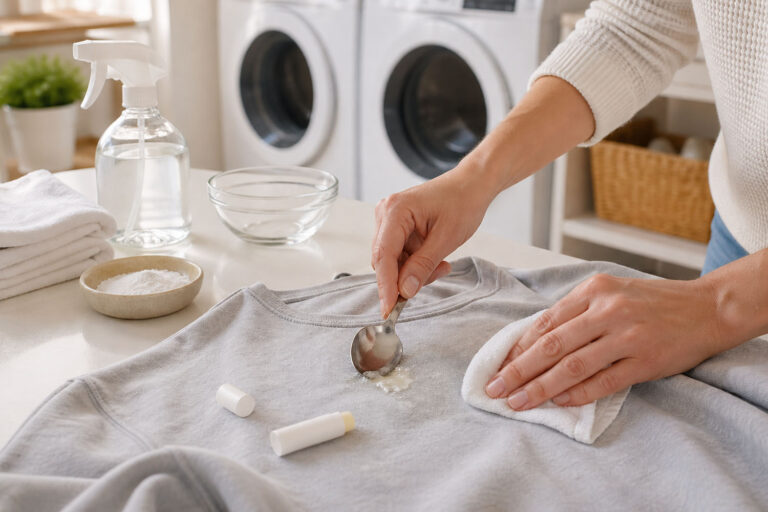
I reached into my coat pocket at a restaurant and felt it immediately. The cap had come off my ChapStick at some point during the day, and the tube had been sitting open against the lining of my jacket, slowly softening in the warmth of my body heat.
The damage was a waxy, slightly shiny smear across a four-inch stretch of dark wool lining. Not catastrophic. But not nothing either.
That was the moment I learned something most guides about how to get ChapStick out of clothes don’t tell you upfront: the scenario you’re dealing with completely changes what you should do. Fresh soft wax still in the fabric needs different treatment than a stain discovered after the coat went through the wash. Clear ChapStick needs different treatment than tinted cherry or strawberry. And if the whole tube went through your dryer, you’re dealing with an entirely different emergency that affects every garment in that load.
Here’s everything that actually works, organized by the situation you’re actually in.
Quick Answer: How to Get ChapStick Out of Clothes
For fresh ChapStick on fabric: freeze the garment for 30 to 60 minutes first to solidify the wax, scrape off as much solid material as possible, then apply blue Dawn dish soap directly to the stain. Let it sit for 30 to 60 minutes, then launder in the hottest water the fabric’s care label allows. Unlike most stains, hot water actually helps here because heat re-liquefies the petroleum wax compounds and makes them easier for surfactants to lift from the fibers.
For tinted ChapStick, add an OxiClean soak after the dish soap step to address the dye component. Check before the dryer. Air dry first to confirm the stain is fully gone.
Why ChapStick Stains Are Different From Regular Oil Stains
ChapStick looks like an oil stain and behaves like one in some ways, but it’s actually more complex. Standard ChapStick Classic contains white petrolatum as its primary active ingredient, combined with carnauba wax, camphor, and other waxy compounds. The petrolatum is a semi-solid mixture of hydrocarbons derived from petroleum with a melting point between 38 and 60 degrees Celsius. That melting point is important: at room temperature or below, petrolatum is a solid wax. At body temperature or above, it starts to soften. In a hot dryer or left in a warm pocket all day, it becomes fully liquid.
This is what makes ChapStick stains behave differently from olive oil or cooking grease. You’re dealing with a material that is solid when cold and liquid when warm. That phase-change behavior is both the problem and the solution. Cooling the stain makes the wax solid and removable. Heat during laundering re-liquefies it so surfactants can grab onto the hydrocarbon chains and pull them out of the fabric.
Tinted ChapStick (cherry, strawberry, any colored formula) adds a synthetic dye or colorant on top of the wax base. That dye component behaves like a fabric pigment stain and needs oxidizing chemistry to break it down, on top of the oil-removal step needed for the wax itself. If you treat tinted ChapStick with dish soap alone and the stain seems gone, check it in good light before laundering. A faint pink or red shadow often remains and needs OxiClean to clear completely.
The Three Scenarios and Which Method to Use
Before reaching for anything, identify which situation you’re actually dealing with. The methods are different and using the wrong one wastes time.
Scenario 1: You just found soft or melted ChapStick on fabric right now, before it’s been washed or dried. Go to Method 1.
Scenario 2: The garment went through the wash but not the dryer, or you discovered a ChapStick stain that’s dried and set at room temperature. Go to Method 2.
Scenario 3: A ChapStick went through the dryer and left oil spots on multiple garments. Go to Method 3. This is the most complex situation and needs its own section.
Pro Tip: Tinted ChapStick Needs an Extra Step
Clear or lightly tinted ChapStick (original, unflavored, SPF formulas) is a pure wax and oil stain. Dish soap and hot water handles it completely. Tinted ChapStick (cherry, strawberry, birthday cake, any visibly colored formula) contains synthetic dyes or colorants that bond to fabric as a pigment stain separate from the wax. After the dish soap treatment and before laundering, apply OxiClean powder dissolved in warm water directly to the stain and let it soak for 30 to 60 minutes. For white fabrics, a hydrogen peroxide and dish soap mixture works even faster on the dye component. If you skip this step on tinted ChapStick, you may find a faint pink or orange shadow remaining after the wax is gone.
Why Hot Water Works Here When It’s Wrong for Almost Every Other Stain
If you’ve read other posts in this stain removal series, you know cold water is the rule for almost everything. Grease, oil, blood, chocolate: cold water prevents heat from setting the stain. ChapStick is the exception, and understanding why prevents a lot of confusion.
The rule against hot water applies to stains that contain proteins or tannins, which denature and bond to fabric under heat. ChapStick contains neither. Its primary staining agents are petroleum wax and hydrocarbon oils, which behave oppositely: heat makes them liquid and mobile, which allows surfactants to surround and lift them out of the fabric. Cold water leaves them in their solid or semi-solid state where they grip fiber more effectively.
Tom Ceconi, president of Heritage Park Laundry Essentials, recommends laundering with the hottest water the fabric care label safely allows, specifically for this reason. The exception: very delicate fabrics like silk and some wools where heat damage to the fiber is a greater risk than leaving a slight wax residue. For those, cool water with an enzyme detergent and longer soak time is the safer compromise.
Fabric Considerations
Cotton and cotton blends: The most forgiving. Handles the freeze, scrape, dish soap, and hot water sequence without complaint. Takes hot water well, which is the optimal treatment.
Denim: Very forgiving and handles hot water without damage. The tight weave means ChapStick often doesn’t penetrate as deeply. The full sequence works well.
Polyester and synthetics: Responds well to dish soap but check the care label before using hot water, as some polyester blends are sensitive to heat. Warm water in this case rather than hot. The petroleum compounds in ChapStick have a chemical affinity for synthetic fibers and may require a second treatment round.
Wool: Skip hot water entirely. Use cool water with a gentle enzyme detergent and a long soak rather than heat. If the stain is significant or the garment is valuable, a dry cleaner with solvent-based cleaning tools will do a better job than any home method.
Silk: Dry cleaner only. Don’t experiment with heat or dish soap on silk. Blot surface wax gently and take it to a professional.
Lining fabrics: Jacket and coat linings (often acetate or polyester) are where most ChapStick stains happen. Acetate is particularly sensitive to heat and to certain solvents. Check the care label carefully. Cool water with dish soap and a long soak is safer than hot water for acetate linings.
Dry-clean only: Blot what you can, freeze to solidify and scrape gently, then take it to the cleaner and tell them specifically that it’s a petroleum wax stain. Dry cleaners have solvent-based cleaning agents designed for exactly this type of stain.
My Step-by-Step Protocol
For fresh ChapStick right now:
Step 1: Freeze the garment for 30 to 60 minutes.
Step 2: Scrape off as much solid wax as possible before it warms up.
Step 3: Apply dish soap generously and work it in. Let sit 30 to 60 minutes.
Step 4: For tinted ChapStick, apply OxiClean soak before laundering.
Step 5: Launder in the hottest water the care label allows.
Step 6: Air dry and check in good light before using the dryer.
For a dried or washed stain:
Step 1: Baking soda absorption. Repeat until clumping stops.
Step 2: Dish soap over the treated area. Let sit 30 minutes.
Step 3: Enzyme detergent wash in warm to hot water.
Step 4: Air dry and check before the dryer.

For the dryer emergency:
Step 1: Clean the dryer drum with rubbing alcohol on a cloth.
Step 2: Treat each stained garment individually with dish soap.
Step 3: Launder separately in hot water.
Step 4: Check every item in raking light while damp before drying.
Warning: Never Do These Things
- Don’t skip the freezer step on fresh soft wax. Trying to treat warm ChapStick just spreads it further into the fabric.
- Don’t rub the stain. Rubbing spreads the wax and drives it deeper into the fiber weave.
- Don’t put it in the dryer until the stain is confirmed gone. Heat will permanently set the remaining petroleum compounds.
- Don’t treat tinted ChapStick with dish soap alone. The dye component requires OxiClean or hydrogen peroxide to clear.
- Don’t forget to clean the dryer drum if the ChapStick went through a full dryer cycle. The wax coats the drum and will transfer to the next load.
What Definitely Does Not Work
Cold water rinse first: For most stains cold water is the right call. For ChapStick it’s counterproductive. Cold water keeps the petroleum wax in its solid state where it grips fabric fibers. You need heat (during the launder step, after the dish soap treatment) to re-liquefy and release the wax.
Regular detergent alone: Standard laundry detergent is formulated for typical soil levels and doesn’t have enough concentrated surfactant power to break down petroleum wax without a dish soap pre-treatment. The stain will look reduced but a greasy shadow usually remains.
Dry brushing without freezing first: Brushing warm or soft wax just smears it across more fabric surface. Always freeze first to make it solid and brittle before any mechanical removal.
Stain remover pens: Useful for many things. The liquid in the pen re-softens the wax and can spread it. Not the right tool for ChapStick.
The One Thing I Wish I Had Known Sooner
The dryer drum problem. The first time a ChapStick went through my dryer and I pulled out a load covered in mystery oil spots, I spent an hour trying to figure out what had stained everything. I didn’t connect the ChapStick in one pocket to spots that had appeared on items from across the entire load.
Once I understood that the dryer heat liquefies the wax and the tumbling action distributes it everywhere, the whole situation made sense. And once I knew to clean the drum before the next load, I stopped making a second load of clean laundry into a third problem.
The jacket lining from the restaurant story is still in my wardrobe. Fully recovered.
Final Thoughts
ChapStick and lip balm stains are fixable in almost every scenario if you match the method to the situation. Fresh wax needs the freezer. Dried wax needs baking soda absorption. Tinted formulas need OxiClean for the dye component. And the dryer emergency needs drum cleaning before anything else.
The hot water rule is the counterintuitive insight that makes the difference. Almost every other stain punishes heat. ChapStick needs it.
Have you dealt with a ChapStick or lip balm laundry disaster? Drop a comment below.
Frequently Asked Questions
How do you get ChapStick out of clothes after drying?
After the dryer, the petroleum wax has been fully liquefied and redistributed into the fabric fibers, making it harder but not impossible to remove. Apply dish soap directly to each oil spot, work it in gently with a toothbrush, and let it sit for at least an hour. Add baking soda over the dish soap, work it in, and let the combination soak for another 30 minutes. Launder in the hottest water the fabric allows with an enzyme detergent. You may need two to three rounds. Air dry and check in raking light before putting anything back in the dryer. Also clean the dryer drum with rubbing alcohol before the next load.
Does ChapStick come out of clothes in the wash?
Not reliably with standard laundry detergent alone. ChapStick contains petroleum wax compounds that require surfactant pre-treatment (dish soap) before washing to break down the waxy bonds. Without pre-treatment, a cold wash cycle will remove very little and a hot wash may improve things slightly but rarely clears the stain completely. The combination of dish soap pre-treatment followed by a hot water wash with enzyme detergent is what reliably removes it.
What removes lip balm from clothes?
Blue Dawn dish soap is the most effective single product for lip balm stain removal on most fabrics. Its surfactant chemistry is specifically designed to break down waxy and oily compounds. For the best results, freeze the garment first to solidify the wax before scraping, then apply dish soap directly, let it sit for 30 to 60 minutes, and launder in hot water. For tinted lip balm products, add an OxiClean soak to address the dye component separately from the wax.
How do you get ChapStick out of clothes without washing?
If you need a quick fix without a full wash, freeze the garment to solidify the wax, scrape off as much solid material as possible, then apply dish soap and let it sit. Rinse thoroughly with warm water from the back of the stain. This won’t replace a proper wash but removes the majority of the wax and prevents the stain from setting while you wait to do laundry. Don’t let dish soap dry in the fabric without rinsing it out.
Can you get ChapStick out of dry-clean only clothes?
At home, your best option is to freeze the garment to solidify the wax and gently scrape off as much solid material as possible without getting the fabric wet. Then take it to a dry cleaner as soon as possible and tell them specifically that it’s a petroleum wax stain. Professional dry cleaners use solvent-based cleaning agents that are specifically formulated for petroleum compounds and will do a significantly better job than any water-based home method on delicate fabrics.
Why does ChapStick leave a stain even after washing?
Because standard laundry detergent doesn’t have enough concentrated surfactant power to fully break down petroleum wax without pre-treatment. The wax compounds grip fabric fibers in their solid state and need dish soap applied at full concentration to surround and loosen them before the wash cycle can carry them away. Cold water also keeps the wax in its solid state throughout the wash cycle. If you wash ChapStick-stained clothes in cold water with regular detergent and no pre-treatment, the stain will look reduced because the wash dilutes and spreads it, but a greasy residue almost always remains.
More Stain Removal Guides:
- How to Get Grease Out of Clothes
- How to Get Oil Out of Clothes
- How to Get Red Wine Out of Clothes
- How to Get Sweat Stains Out of Clothes
- How to Get Chocolate Out of Clothes
- How to Get Ink Out of Clothes
- How to Get Mud Out of Clothes
- How to Get Deodorant Off Black Clothes
- How to Get Blood Out of Clothes
- How to Get Coffee Stains Out of Clothes
- How to Get Grass Stains Out of Clothes
- How to Get Tomato Sauce Out of Clothes
- How to Get BBQ Sauce Out of Clothes
- How to Get Mustard Out of Clothes
More Cleaning Tips:

Better Living may earn commissions through affiliate links and may occasionally feature sponsored or partner content. If you make a purchase through our links, we may receive a small commission at no cost to you.