
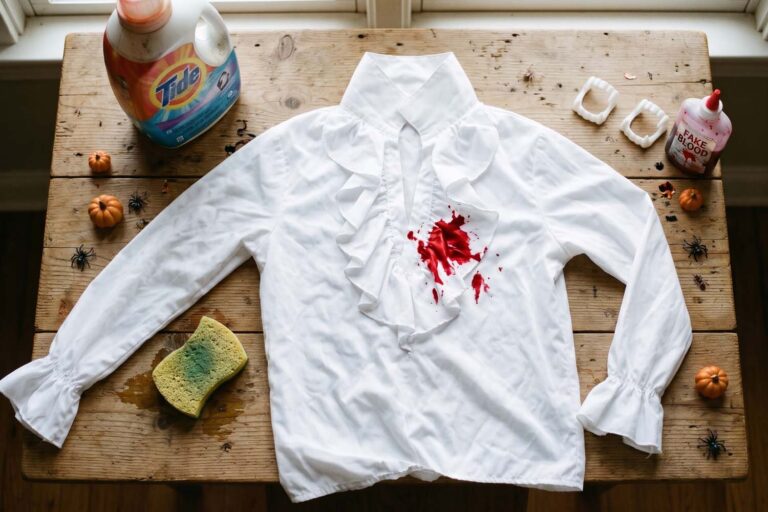
Every Halloween season, someone’s white costume shirt meets a bottle of fake blood. It drips down the front, smears across a sleeve, or ends up on the one jacket that was supposed to be returned after the party. The first instinct is to rub it with whatever is nearby, and that can spread the stain and make cleanup harder.
Fake blood is not real blood, and it does not behave like real blood on fabric. The formulas vary, but many combine a sticky base with a red dye, so you may have a sticky problem and a color problem at the same time. Treating them in the right order gives you the best shot.
Here is how to get fake blood out of clothes, plus what to do with costumes, carpet, upholstery, skin, and the stains you want to prevent next time.
Quick Answer: How to Get Fake Blood Out of Clothes
For washable clothes, check the garment’s care label and the fake-blood label first. Then:
- Gently lift or blot off the excess without rubbing.
- Sponge the stain with cool water. If it remains and the care label allows soaking, soak it in cool water for at least 30 minutes.
- Pretreat with a prewash stain remover or liquid laundry detergent, then launder as the care label directs.
- Inspect the stain while the garment is wet. If color remains, repeat the treatment and keep the garment out of the dryer.
- If color persists, consider a bleach that both the product label and the fabric allow, or see a professional cleaner.
Removal is not guaranteed, because fake blood formulas, dyes, and fabrics vary.
How I Researched This
This guide draws on the American Cleaning Institute’s holiday stains advice, which includes food-coloring stains, the University of Georgia Extension’s pages on dye stains and syrup stains, Iowa State University Extension’s holiday laundry advice, and the Carpet and Rug Institute’s spot removal guidance. None of these covers fake blood directly, so I am applying their food-coloring and syrup guidance to the most common formulas. I did not run my own fabric tests, so there are no test results or success rates below. Always check the care label and test any treatment on a hidden spot first.
Does Fake Blood Wash Out of Clothes?
Sometimes, but not always. Whether fake blood washes out depends on the formula, the fabric, and how quickly you treat it. Some products are labeled washable, and others may leave a lasting stain, so read the label for any cleaning directions before you start. Even a product described as water soluble can carry a warning that it may permanently stain fabric.
That uncertainty is why speed and the right sequence matter. Iowa State University Extension says fresh stains are much easier to remove than those over 24 hours old.
Why Fake Blood Stains Are Hard to Remove
Formulas differ, but the pattern is similar. Many homemade recipes use corn syrup with red food coloring. One theatrical blood recipe from Food Network combines golden corn syrup, chocolate syrup, and red food coloring. Other products use different bases, such as gels or thickened water. According to Simulation Canada, many brands of stage blood get their color from the synthetic dye FD and C Red No. 40, which can stain some surfaces.
So the base may be sticky or greasy, and the dye is often the part that lingers. For syrup-based blood, University of Georgia Extension’s syrup guidance for clothing is a soak in warm water with a little dish detergent and white vinegar. For the color, the American Cleaning Institute recommends cool water for food-coloring stains, and UGA’s apparel steps for red dye finish with bleaching for any remaining traces.
One more point: syrup-and-food-coloring fake blood should not automatically be treated like a real-blood stain. If it is real blood on the fabric, use our guide to getting blood out of clothes instead.
Not All Fake Blood Is the Same
Homemade corn syrup blood: A sticky base plus red food coloring, sometimes with chocolate syrup or cornstarch. Expect a sticky patch and a red or pink tint. If you are curious about the ingredients, we cover whether corn syrup goes bad and whether chocolate syrup goes bad.
Store-bought liquid fake blood: Formulas vary. Check the label for washing directions first.
Thick gel or paste blood: If it can be lifted without damaging the fabric, scrape off the excess before adding water, because a thick glob can smear when it is wet.
Makeup-style or cream blood: If it feels greasy, treat the greasy part first, as we explain in our grease stain guide, then treat any leftover color.
Dried fake blood: Older stains are harder to remove and may need repeated treatment. Gently flake off any crust, soak, pretreat, launder, and inspect before drying.
How to Get Fake Blood Out of Clothes, Step by Step
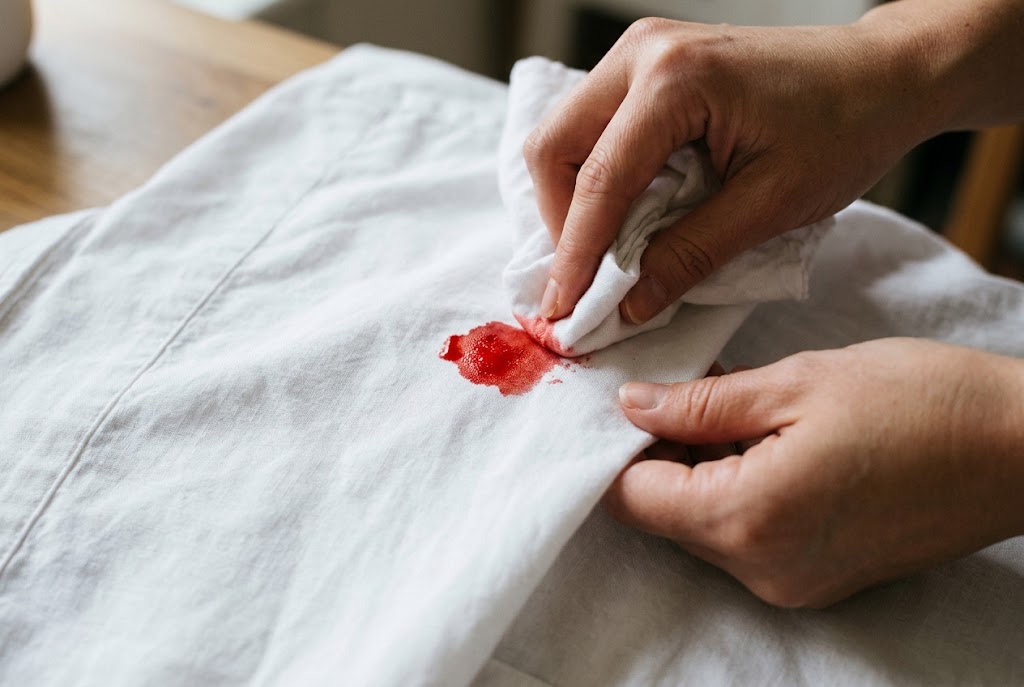
These steps are for washable clothes. Check the care label first, and if it says not to soak, do not soak. For the color, I am following the American Cleaning Institute’s cool-water approach. UGA’s syrup steps start with warm water, so other methods exist, but cool water is the most cautious opening for a dye stain.
Pro Tip for Stubborn Color
Keep an oxygen bleach powder (affiliate link) in the laundry room for leftover color on washable, colorfast fabrics. I did not test it for this guide, so follow the product label for timing and fabric safety, and check the stain before drying.
Which Step for Which Situation
| Situation | Start with |
|---|---|
| Fresh liquid fake blood on washable clothes | Steps 1, 2, and 3, then inspect wet |
| Thick gel or paste blood | Lift off the excess first, then Steps 2 and 3 |
| Dried-on fake blood | Flake off the crust, then Steps 2 and 3, repeating if needed |
| Sticky patch after washing | UGA’s syrup soak in Step 3, then re-wash |
| Red or pink shadow on washable, colorfast fabric | Step 4, if the care label allows it |
| Costume labeled spot clean or dry clean only | Blot gently and see a professional cleaner |
| Carpet, upholstery, skin, or hard surfaces | See the sections below |
Fabric Matters More Than You Think
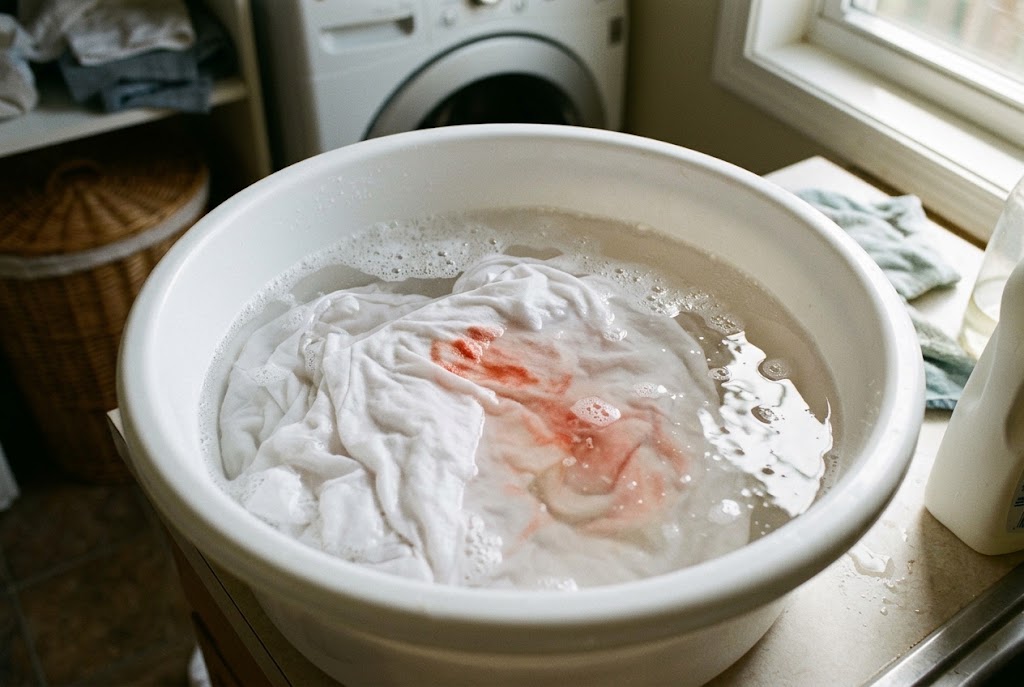
Whatever the fabric, check the care label first and test any product on a hidden spot.
Cotton, linen, and polyester: Steps 1 through 3 are generally reasonable starting points for washable items, subject to the care label and a spot test. White cotton shows color the most, so check it carefully while wet.
Costumes: Many costumes use delicate or specialty fabrics, such as satin, velvet, fleece, felt, and faux fur, and the label may say spot clean only or dry clean only. Follow the label, avoid long soaks and bleach unless it permits them, and take the costume to a professional cleaner if the label says to.
Silk and wool: Blot gently, do not rub, and skip bleach and homemade mixes. Take the garment to a professional cleaner, and tell them it is fake blood.
Sheets, towels, and other washables: Treat them like washable clothes, following each care label.
Rented or borrowed costumes: Do not treat them yourself without checking with the owner or rental shop first, since many have their own cleaning policies.
Fake Blood on Carpet and Upholstery
Carpet and upholstery are not the same as washable clothes, so use surface-specific guidance and check the manufacturer’s instructions first.
Carpet: The Carpet and Rug Institute says to spoon up semi-solids, blot liquids with a white cloth, and pretest any solution in an inconspicuous area. For carpet that permits it, its cleaning solution is 1/4 teaspoon of liquid hand dishwashing detergent per cup of lukewarm water, never stronger, not automatic dishwasher detergent. It says never to use laundry detergent on carpet because it may contain optical brighteners. Apply a small amount to a white cloth, work gently from the edges of the spill toward the center without rubbing, rinse out the residue with small amounts of water, and blot dry. Do not saturate the backing, and call a professional for stubborn spills. For general blotting technique, see our guide to getting red wine out of carpet.
Upholstery: Lift off the excess, then check the furniture’s cleaning code and the manufacturer’s instructions before applying anything. Common codes include W for water-based cleaners, S for solvent-based cleaners, WS for either, and X for vacuuming or light brushing only. The code alone is not permission to saturate the fabric, and the manufacturer’s full instructions come first. Test a hidden area, avoid overwetting, and contact a professional cleaner if you cannot find the code.
Fake Blood on Skin, Hair, and Hard Surfaces
Skin: Wash with mild soap and lukewarm water. For makeup-style blood, follow the product’s removal directions, which may call for a gentle makeup remover or oil-based cleanser. Do not scrub hard, and do not use bleach, alcohol, or solvents on skin. Stop if irritation develops, and see a doctor if it continues.
Hair: Rinse and shampoo, and check the product label for removal directions, especially for thick gels or sprays.

Hard surfaces: Wipe up promptly with a damp cloth and a little mild dish soap in water, and test a hidden spot first, since unsealed or painted surfaces can stain. Check the surface manufacturer’s cleaning instructions before using anything stronger.
How to Prevent Fake Blood Stains
Prevention is easier than cleanup. Look for products labeled washable, and read the label for any warnings, because even products described as water soluble may stain fabric. Test a small hidden spot on the garment before the party, and wear an old or dark layer if you cannot risk the clothes.
Transfer is another risk. Costume artisan Denise Wallace-Spriggs, writing for Rosco, calls “Pink Shirt Syndrome” the way stage blood can end up turning white shirts pink over time. If a bloody costume touches other light fabrics, treat that contact as a stain risk too.
If you are planning the rest of the season, we have Halloween bakeware and recipes, creative pumpkin decorating ideas, and haunted day trips from Philadelphia.
Warning: Never Do These Things
These common mistakes can make a fake blood stain harder to remove:
- Don’t rub or scrub – It can spread the stain and work more of the mixture into the fabric.
- Don’t put it in the dryer until the stain is completely gone. Heat from drying can make a remaining stain more permanent.
- Don’t put off treatment – Iowa State says fresh stains are much easier to remove than those over 24 hours old.
- Don’t combine stain-removal products or homemade mixtures – Never mix chlorine bleach with ammonia, vinegar, or other cleaners. Rinse thoroughly between products and follow each label.
Fake Blood Stain FAQ
Does fake blood stain clothes permanently?
It can, especially if the formula contains a dye that bonds to the fabric or if the garment goes in the dryer before the stain is gone. Prompt treatment may help, but removal depends on the formula, the fabric, and any treatment already applied.
How do you get fake blood out of white clothes?
Blot up the excess, sponge and soak in cool water if the care label allows, pretreat with a prewash stain remover or liquid laundry detergent, and launder. If color remains, a bleach that both the product label and the fabric allow may help.
Can you get dried fake blood out of fabric?
Dried stains may still respond to treatment, but removal is not guaranteed. Flake off any crust gently, soak in cool water if allowed, then pretreat, launder, and inspect before drying.
Should I use hot or cold water on fake blood?
Start with cool water, because the American Cleaning Institute recommends it for food-coloring stains. Other stain guidance uses warm water for syrup, so follow the garment’s care label and any product directions after the first treatment.
Does vinegar get fake blood out of clothes?
Vinegar is part of UGA’s warm soak for syrup stains on clothing, so it may help with sticky residue. I did not find extension guidance recommending it for the dye, and you should never mix vinegar with chlorine bleach.
Does hydrogen peroxide or rubbing alcohol remove fake blood?
Hydrogen peroxide is a bleaching agent that can lighten dyed fabric, and rubbing alcohol can damage some fabrics, so I would not use either as a first step. I did not find extension guidance recommending them for fake blood. If you try one, test a hidden spot and follow the label.
How do I get fake blood out of a costume that is dry clean only?
Gently blot up the excess without rubbing and take it to a professional cleaner as soon as possible. Tell the cleaner what caused the stain and what, if anything, you have already applied.
How do I get fake blood out of carpet?
Spoon up any thick material, blot with a white cloth, and test a carpet-safe solution in a hidden spot. The Carpet and Rug Institute suggests 1/4 teaspoon of liquid hand dishwashing detergent per cup of lukewarm water, never laundry detergent.
Is fake blood treated the same as real blood?
No. Syrup-and-food-coloring fake blood should not automatically be treated like a real-blood stain, so base your treatment on the formula and the fabric’s care label. For real blood, see our guide to getting blood out of clothes.
Final Thoughts
For washable clothes stained with syrup-and-dye fake blood, a careful sequence of blotting, cool-water treatment, pretreatment, and washing is a reasonable starting point, and the dryer should wait until you have checked the stain. Stubborn dye may remain, and delicate costumes belong with a professional.
Have you rescued a favorite shirt or costume from a fake blood disaster? I’d love to hear what worked for you – drop a comment below and share it.
Related Guides:
Looking for more cleaning tips? Check out these helpful resources:
- How to Remove Every Type of Stain from Clothes (Complete Guide)
- How to Get Blood Out of Clothes
- How to Get Red Wine Out of Clothes
- How to Get Lipstick Out of Clothes
- How to Get Foundation Out of Clothes
- How to Get Hair Dye Out of Clothes
- How to Get Berry Stains Out of Clothes
- How to Get Candle Wax Out of Clothes

Better Living may earn commissions through affiliate links and may occasionally feature sponsored or partner content. If you make a purchase through our links, we may receive a small commission at no cost to you.