
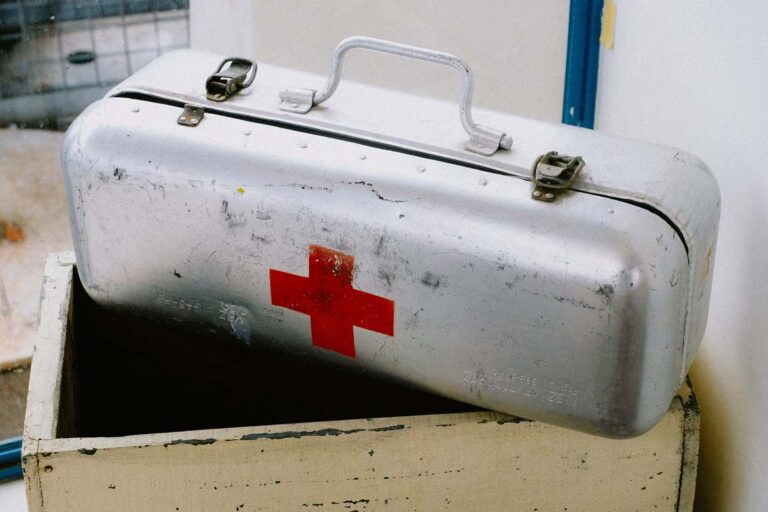
You pull the first aid kit out of the closet for the first time in years, dust it off, and wonder: does a first aid kit go bad?
The short answer: The kit itself, the plastic box or nylon pouch, doesn’t expire. What’s inside it does, and not all at the same rate. According to the American Red Cross, most first aid kit contents can last up to five years if the packaging stays sealed and undamaged, but the real answer depends on which item you’re looking at. Medications are the most time-sensitive part of any kit, sterile items like gauze can last indefinitely until their seal is compromised, and tools like scissors and tweezers don’t expire at all. A first aid kit is only as reliable as its most compromised component, so the honest way to answer “does it expire” is item by item, not as one blanket date.
For more shelf-life guides across your household, check out our full Household Shelf Life Guide.
Key Takeaways
There’s no single expiration date for a whole kit. A kit is a bundle of different products, each with its own shelf life, and it’s only as good as its earliest-expiring item.
Medications are the priority to check. Anything with an active ingredient, pain relievers, antihistamines, antibiotic ointment, carries a real FDA-regulated expiration date and shouldn’t be used past it.
Bandages and gauze don’t “go bad” so much as fail. Adhesive bandages lose their stick over time rather than becoming unsafe; sterile gauze and compresses can last indefinitely but must be discarded if the wrapper is torn, punctured, or damp.
Tools like scissors and tweezers never expire, but check them for rust or corrosion before you rely on them in an emergency.
Why a First Aid Kit Doesn’t Have One Expiration Date
Most product-specific “does it go bad” questions have one mechanism to explain: oxidation, evaporation, bacterial growth. A first aid kit doesn’t work that way, because it isn’t one product. It’s a collection of unrelated categories of items, drugs, sterile disposables, adhesives, tools, and sometimes chemical packs, and each one degrades through a completely different process on its own timeline.
That’s why manufacturers sometimes print a general “3 to 5 year” guideline on a complete kit, but that number is really just a planning shortcut. It’s not a hard cutoff the way an FDA drug expiration date is. The only way to know if your specific kit is still reliable is to check what’s actually inside it.
The Four Categories, and How Each One Actually Fails
Medications (pain relievers, antihistamines, antibiotic ointment, hydrocortisone cream) are regulated by the FDA and carry a printed expiration date. Past that date, the active ingredient can lose potency or break down chemically. This is the one category where “expired” has real teeth: the FDA warns that certain expired medications risk bacterial growth, and sub-potent antibiotics specifically can fail to clear an infection.
Sterile disposables (gauze pads, compresses, alcohol prep pads, antiseptic wipes) are sterile only as long as the packaging is intact. An unopened, undamaged gauze pad can stay sterile for years, but a torn wrapper, dampness, or visible mold means it’s compromised regardless of any printed date. Antiseptic wipes specifically dry out and lose disinfecting strength over time even when sealed.
Adhesives (bandages, medical tape, moleskin) don’t become unsafe with age so much as useless. The backing material itself rarely degrades, but the glue does, so an old bandage is more likely to peel off mid-use than to cause harm.
Tools and hardware (scissors, tweezers, a thermometer, a CPR mask) are the one category that genuinely doesn’t expire. Check metal parts for rust or corrosion, check a digital thermometer’s battery, and otherwise these can stay in a kit indefinitely.
First Aid Kit Item Shelf Life at a Glance
| Item | Typical Shelf Life | What Actually Happens |
|---|---|---|
| Adhesive bandages | Up to 5 years | Adhesive weakens; the bandage itself isn’t unsafe, just less likely to stay put |
| Sterile gauze & compresses | Indefinite if sealed | Fine until the wrapper is torn, punctured, or exposed to moisture |
| Antiseptic wipes / alcohol pads | 2–3 years | The liquid dries out or evaporates inside the sealed packet over time |
| Antibiotic ointment | 1–3 years (per label) | FDA-regulated drug; follow the printed date exactly |
| Pain relievers / antihistamines | 1–5 years (per label) | Active ingredient loses potency; some can become chemically unstable |
| Instant cold/hot packs | 2–5 years | Internal chemical reaction weakens; won’t get as cold or hot as designed |
| Elastic/compression bandages | 3–5 years | Elastic loses tension and stops compressing effectively |
| Scissors, tweezers, CPR mask | No real expiration | Check for rust, corrosion, or cracking; otherwise fine indefinitely |
Two items from other posts on this site are worth calling out specifically, since they’re common first aid kit contents in their own right: rubbing alcohol and hydrogen peroxide both lose antiseptic strength gradually rather than spoiling outright, and both are worth a fizz or smell check if the bottle in your kit has been sitting for a few years. If your kit also includes a battery-powered flashlight or digital thermometer, it’s worth checking those cells too; see our guide on whether batteries go bad for signs of a dead or leaking one.
Signs It’s Time to Replace Something in Your Kit
Past the printed expiration date on any medication, ointment, or antiseptic wipe packet.
Torn, punctured, or unsealed packaging on anything meant to be sterile, regardless of the date printed on it.
Visible discoloration, brittleness, or a chemical smell from ointments or liquid antiseptics.
Rust or corrosion on scissors, tweezers, or any metal tool.
Bandages that won’t stick when you test the adhesive, even if they’re not past a printed date.
How to Store a First Aid Kit for Maximum Shelf Life
Keep it cool and dry. Heat and humidity are the two biggest accelerants across every category in the kit, a car trunk or a garage in summer is the worst place to store one long-term.
Keep it out of direct sunlight, which degrades both medications and the plastic casing over time.
Check it twice a year, not just once, and restock anything used or expired immediately rather than waiting for a full annual audit.
Keep a simple written or digital log of what’s inside and when you last checked it, so you’re not re-inspecting from scratch every time.
A first aid kit is really one piece of a broader home emergency readiness setup. If you haven’t looked at your smoke alarms, fire extinguisher, or escape plan in a while, our home fire prevention guide covers all three. And if you travel, it’s worth packing a compact version of your kit alongside a portable carbon monoxide detector, since hotels and rentals don’t always have working alarms of their own.
Disposing of Expired First Aid Supplies Safely
Expired medications shouldn’t go straight in the trash or down the drain. The FDA’s guidance on medicine disposal recommends a drug take-back program where available; if one isn’t, mix pills with something unappealing like coffee grounds or cat litter, seal it in a bag, and then throw it out. Chemical hot and cold packs can be thrown in the regular trash, but shouldn’t be cut open first since some contain ammonium nitrate or urea. Sharps like lancets or needles need a proper sharps container regardless of whether they’re expired. Everything else, old gauze, bandages, wipes, plastic tools, is safe for regular household trash.
Frequently Asked Questions
Do unused bandages ever really expire?
Not in the sense of becoming unsafe. The main failure mode is the adhesive weakening, so an old bandage is more likely to fall off than to cause harm. If it’s still sealed, clean, and sticks when you test it, it’s fine to use.
Is it safe to use expired antibiotic ointment?
No. It’s an FDA-regulated over-the-counter drug, and past its expiration date there’s no guarantee it will work as intended or remain chemically stable. Replace it rather than risk a wound infection going untreated.
My gauze pad’s wrapper is intact but it’s been in the kit for 8 years. Is it still sterile?
Most likely, but manufacturers generally don’t guarantee sterility indefinitely, and there’s usually no printed date to confirm against. If it’s been more than five years and you have any doubt, it’s cheap enough to replace rather than gamble on a wound dressing.
How often should I actually go through my first aid kit?
Twice a year is the common recommendation, timed to something you’ll remember, like daylight saving time changes, plus a quick check any time you use something from it.
Do I need to replace the whole kit at once, or just individual items?
Just the individual items. Unless the case or pouch itself is damaged, there’s no reason to discard tools, unopened sterile items, or anything else still in good condition.
Is an expired EpiPen (epinephrine auto-injector) still safe to use in an emergency?
If it’s the only one available during a severe allergic reaction, use it rather than nothing. Research analyzing dozens of expired EpiPens found that even devices up to four years past their date still retained at least 80% of their labeled epinephrine dose, and a discolored or cloudy solution is really the only visual red flag to check for. That said, this isn’t a reason to let one expire on purpose: manufacturer and FDA guidance is still to replace it on schedule, since a full, guaranteed dose matters most in a life-threatening reaction. If you or a family member carries one, this is the single item in a first aid kit worth tracking most closely.
Further Reading
- Does Rubbing Alcohol Go Bad?
- Does Hydrogen Peroxide Go Bad?
- Do Batteries Go Bad?
- 10 Easy Ways to Prevent Fires at Home
- Household Shelf Life Guide

Better Living may earn commissions through affiliate links and may occasionally feature sponsored or partner content. If you make a purchase through our links, we may receive a small commission at no cost to you.