
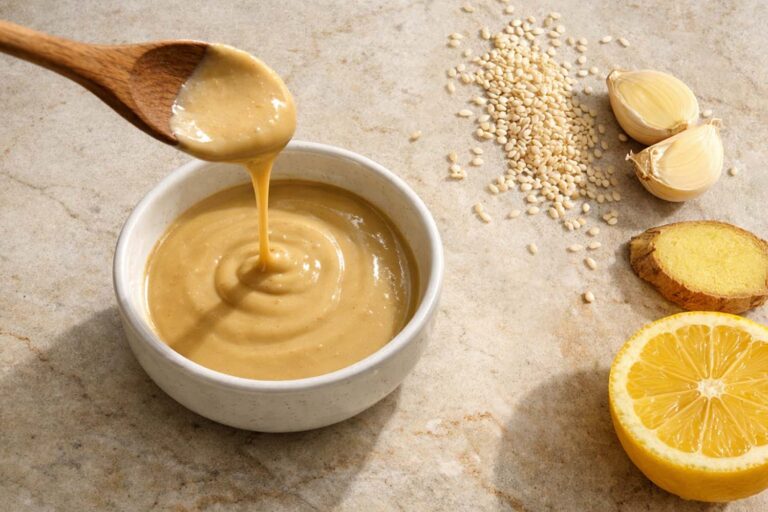
Does tahini go bad? Yes, but it spoils in a way that trips almost everyone up. The number one mistake people make is dumping out the oil that has separated to the top of the jar, then assuming the thick paste left behind has gone bad too. That separated oil is completely normal. The real spoilage to watch for is rancidity, which is subtle, smells sharp and chemical, and is easy to confuse with tahini’s naturally earthy, bitter flavor.
Tahini is ground sesame seeds, and sesame seeds are packed with natural oils. Those oils act as a preservative, and they also eventually go rancid when exposed to heat, light, and air over time. Once you understand that distinction, you know everything you need to know about tahini spoilage.
For a full reference on keeping pantry staples fresh, visit our Food Storage Guide. For the fridge-or-pantry question specifically, see: Does Tahini Need to Be Refrigerated?
⚡ Short Answer
Yes, tahini goes bad, but it takes a long time. Unopened tahini lasts 1 to 2 years in the pantry and is often still good for months past the best-by date. Once opened, expect peak quality for 3 to 6 months, and usable quality up to a year with proper storage. The main spoilage mode is rancidity, not mold. Oil separation on top is normal. Do not throw it out.
🤔 Why Tahini Spoils Differently Than Most Condiments
Most condiments go bad because of bacteria or mold. Tahini almost never does. It is essentially sesame paste in a very fatty, very low-moisture environment. It is exactly the kind of place bacteria and mold struggle to survive.
What tahini does instead is go rancid. Rancidity happens when the unsaturated fats in sesame oil are exposed to oxygen, heat, or light over time. The fats oxidize and break down into compounds that smell and taste sharp, bitter, and unpleasant. Rancid tahini is unlikely to make you sick (it is oxidation, not bacterial spoilage), but the flavor becomes genuinely unpleasant.
💡 The tricky part
Tahini naturally has a slightly bitter, earthy, almost sharp flavor even when perfectly fresh. The test is not whether it tastes bitter. The question is whether that bitterness has intensified into something sharp, chemical, or paint-like. Normal tahini bitterness smells nutty. Rancid tahini smells like old cooking oil or nail varnish.
Good news: sesame seeds contain natural antioxidants called sesaminol and sesamol, which actively slow down oxidation. This is why good-quality tahini keeps considerably longer than most nut butters. Better sesame seeds mean longer natural protection.
🕓 Tahini Shelf Life at a Glance
| Storage Situation | How Long It Lasts |
|---|---|
| Unopened — pantry | 1 to 2 years; often good past the best-by date |
| Opened: cool, dark pantry | Peak quality 3 to 6 months; often usable up to best-by date |
| Opened — refrigerated | 6 to 12 months peak quality |
| Homemade tahini | Refrigerate and use within 3 to 4 weeks |
According to the USDA FSIS, best-by dates on shelf-stable products indicate peak quality, not a safety cutoff. For tahini stored properly in a cool, dark pantry, usable life frequently extends well past the printed date.
Soom Foods, a well-regarded tahini producer, states on their website that opened tahini can last up to a year after opening when kept free from moisture contamination, and that they prefer pantry storage for everyday use. Always check the label on your specific brand since formulations vary.
🔍 How to Tell If Tahini Has Gone Bad
Fresh tahini is smooth (or separated with clean oil on top), light to medium beige-brown, and smells nutty and earthy with mild natural bitterness. Here is how to read the signs correctly.
🔴 Toss It
👃 Sharp, chemical, or paint-like smell. This is the primary rancidity signal. Rancid tahini smells noticeably off, like old cooking oil, nail varnish, or something faintly chemical. It is unmistakable once you know what you are smelling for. If opening the jar makes you recoil, trust that instinct.
👅 Aggressively bitter or harsh taste. Rancid tahini tastes sharply bitter with a chemical edge that lingers unpleasantly, clearly different from normal sesame flavor. A small taste that makes you want to spit it out means it has gone rancid.
Completely dried out or crumbly. Very old or poorly stored tahini can harden into a dry, crumbly solid. Quality is gone at this point and it should be replaced.
Visible mold. Rare with tahini, but possible if a wet spoon introduced moisture into the jar. Any fuzzy growth means the whole jar goes.
🟢 Totally Normal: Keep It
Oil separated on top. This is the one everyone gets wrong. Tahini is ground sesame seeds with naturally occurring oils, and those oils rise to the surface over time, just like natural peanut butter. The thick paste settles to the bottom; a layer of golden oil sits on top. Stir it vigorously back in before using. Do not pour it off.
⚠️ Do not pour off the separated oil
That oil is not surplus. It is part of the tahini. Pour it off and you are left with a dry, crumbly paste that has lost its texture and most of its flavor. Always stir it back in. For a very separated jar, a hand blender does the job quickly.
Natural earthy bitterness. Sesame seeds have a naturally bitter, slightly sharp flavor. Good tahini always tastes this way. Fresh bitterness is pleasant and nutty. Rancid bitterness is harsh, chemical, and lingers badly.
Dark specks in the paste. Black or dark brown flecks are remnants of sesame hull not fully removed during processing. That is a quality variable, not a spoilage sign.
Thick, stiff consistency from the fridge. Cold temperatures make tahini significantly firmer. Not spoilage. Just physics. Let it come to room temperature for 10 to 15 minutes, or stir a small amount of warm water into your bowl (not the jar) to thin it.
⚡ What Speeds Up Spoilage
Heat and direct light. These are the primary drivers of rancidity. A jar sitting on a sunny counter or next to the stove can go rancid in weeks rather than months. Cool, dark storage is the single biggest factor in how long your tahini stays good.
Moisture in the jar. Tahini’s low moisture content is what keeps mold away. A wet spoon dipped into the jar introduces water and creates mold risk. Always use a dry utensil.
Seed quality and processing. Higher quality tahini made from freshly harvested sesame seeds contains more natural antioxidants and lasts longer. Organic and minimally processed varieties may go rancid slightly faster than commercial brands with added stabilizers.
Hull-on vs. hulled sesame. Unhulled (whole) sesame tahini has a stronger flavor and a slightly shorter shelf life. Hulled tahini is smoother, milder, and the most common variety in stores.
🧊 Storage Tips That Actually Matter
- Cool, dark pantry for frequent use: away from the stove, dishwasher, and any sunlight. Same storage logic as olive oil.
- Refrigerate if you use it infrequently: the fridge significantly extends quality beyond 6 months after opening.
- Always use a dry spoon: moisture is the fastest way to shorten a jar’s life.
- Seal tightly after every use: oxygen drives rancidity; minimize air exposure each time.
- Stir well before using: especially after sitting for a while, redistribute the oil evenly through the paste.
- Write the opening date on the lid: saves the guessing game months down the road.
- Homemade tahini is different: no preservatives, must stay refrigerated, use within 3 to 4 weeks.
🥙 Great Ways to Use Up an Open Jar
Tahini is one of the most versatile pantry staples around. A few ideas to keep that jar moving:

- Rainbow Spring Rolls with a creamy tahini dipping sauce
- Drizzled over roasted vegetables alongside other foods that help lower blood pressure
- Stirred into a lemon-garlic salad dressing with fresh olive oil. Check that yours is still good with our post on does olive oil go bad
- Blended into gluten-free recipes as a rich, nutty binder
❓ Frequently Asked Questions
How can you tell if tahini has gone rancid?
Rancid tahini has a sharp, chemical, or paint-like smell clearly different from its normal nutty aroma. The taste becomes aggressively bitter with a chemical edge. If it smells fine and the bitterness tastes like sesame rather than something off, it is probably still good.
Is it safe to eat rancid tahini?
Rancid tahini is unlikely to make you sick. Rancidity is an oxidation process, not bacterial spoilage. The flavor is genuinely unpleasant, though. Most people discard it rather than use it.
Why is there oil floating on top of my tahini?
Completely normal. The sesame oils in tahini naturally separate and rise to the surface over time, just like natural peanut butter. Stir it vigorously back into the paste before using. Never pour it off; you need it for proper texture and flavor.
How long does tahini last once opened?
Opened tahini in a cool, dark pantry stays at peak quality for 3 to 6 months and is often usable up to the best-by date. Refrigerated, quality holds for 6 to 12 months. Brand and seed quality affect this range, so check your label for the manufacturer’s specific guidance.
Can you use tahini past the expiration date?
Yes, if stored properly and showing no signs of rancidity. The USDA FSIS confirms best-by dates reflect peak quality, not a safety cutoff. Smell and taste are more reliable guides than the date for an oil-based product like tahini.
Does tahini need to be refrigerated?
It depends on how often you use it. Frequent users can keep tahini in a cool, dark pantry. Infrequent users are better off refrigerating to slow rancidity. Full breakdown: Does Tahini Need to Be Refrigerated?
What does rancid tahini taste like?
Rancid tahini tastes sharply and aggressively bitter with a chemical or metallic edge that lingers on the tongue. It is distinctly different from the natural earthy bitterness of fresh tahini, which is pleasant and nutty. The smell is usually the first giveaway: rancid tahini smells like old cooking oil, nail varnish, or something faintly chemical. Once you taste that chemical sharpness, you will know immediately. It does not taste like sesame anymore.
Does tahini go bad not refrigerated?
It can, but slowly. An unopened jar in a cool, dark pantry can last 1 to 2 years. Once opened, pantry-stored tahini stays at peak quality for 3 to 6 months. The risk is rancidity, not bacteria. Heat and light exposure accelerate that timeline significantly, so storage conditions matter more than whether the fridge is involved.
Does tahini spoil in the fridge?
Yes, eventually. Refrigeration slows rancidity considerably but does not stop it permanently. Refrigerated opened tahini typically holds peak quality for 6 to 12 months. After that, quality gradually declines. Check for a sharp, chemical smell or an aggressively bitter taste. If it still smells and tastes like sesame, it is fine.
What happens if you eat expired tahini?
If the tahini is rancid, you are unlikely to get sick. Rancidity is an oxidation process, not bacterial spoilage. It makes food unpleasant but rarely dangerous. You might notice an off, bitter, or chemical taste. If the tahini has somehow developed mold (which is rare), the calculus changes and you should discard it. When in doubt, trust your nose: rancid tahini has an unmistakable off smell.
📚 Related Posts
- Does Tahini Need to Be Refrigerated?
- Does Peanut Butter Go Bad? (very similar shelf life and spoilage pattern)
- Does Olive Oil Go Bad? (same rancidity logic)
- Does Fish Sauce Go Bad?
- Does Hoisin Sauce Go Bad?
- Food Storage Guide
Sources: USDA FSIS — Food Product Dating | USDA FSIS — Shelf-Stable Food Safety

Better Living may earn commissions through affiliate links and may occasionally feature sponsored or partner content. If you make a purchase through our links, we may receive a small commission at no cost to you.