
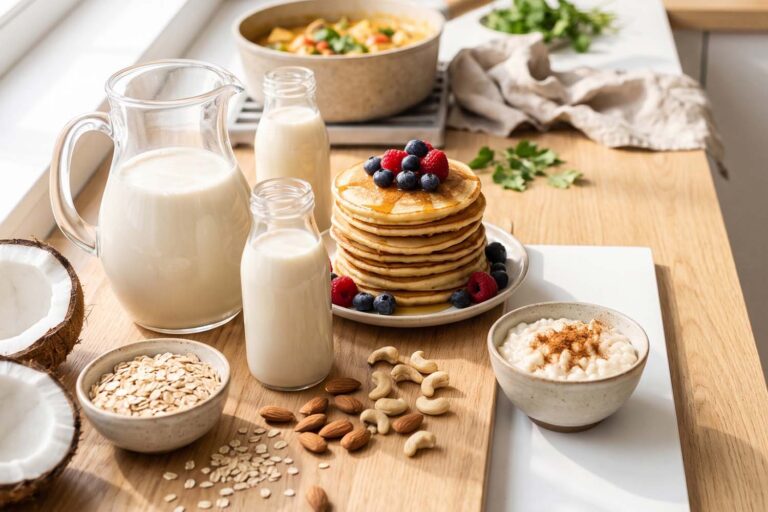
The dairy aisle looks remarkably different than it did a decade ago. Where once there stood only traditional milk in various fat percentages, now entire sections overflow with plant-based options made from nuts, grains, legumes, and tropical fruits. For anyone curious about incorporating these alternatives into everyday cooking, understanding what each one brings to the table makes all the difference.
From creamy, delicious coconutmilk to nutty almond varieties, these beverages have carved out permanent spots in kitchens everywhere.
Why Cooks Are Reaching for Plant-Based Options
The shift toward non-dairy milks in cooking isn’t just about dietary restrictions, though those certainly play a role. Many home cooks find that different plant milks offer unique flavor profiles and textures that complement specific dishes better than traditional dairy might. A Thai curry made with coconut-based milk tastes authentic in a way that dairy simply cannot replicate. Oat milk in a morning smoothie adds a certain creaminess and subtle sweetness that works beautifully with fruit.
A Thai curry made with coconut-based milk tastes authentic in a way that dairy simply cannot replicate.
Availability has also changed the game. What once required a trip to a specialty store now sits on regular grocery shelves, making experimentation far more accessible. This convenience means more people are discovering that plant milks can do more than fill a cereal bowl.
Getting to Know the Major Players

Oat Milk
Oat milk has become something of a darling in coffee shops, and for good reason. Its naturally sweet taste and creamy consistency make it a favorite for lattes and cappuccinos. In the kitchen, oat milk performs well in baked goods where a mild flavor is preferred. Muffins, pancakes, and quick breads all turn out nicely when oat milk steps in. The texture tends to be thicker than some alternatives, which can be advantageous in recipes that benefit from body.
Almond Milk
Almond milk remains one of the most widely available options, and its light, slightly nutty flavor makes it versatile. Because it tends to be thinner than dairy milk, adjustments might be needed in certain recipes. For smoothies, overnight oats, and lighter sauces, almond milk works without fuss. The subtle nuttiness can complement desserts featuring chocolate or stone fruits particularly well.
Soy Milk
Among plant-based options, soy milk comes closest to dairy in terms of protein content and consistency. This makes it a reliable choice for savory cooking, including cream-based soups and sauces. Soy milk also performs well in baking, producing results similar to what traditional milk would yield. Its neutral flavor when unsweetened allows it to blend into recipes without announcing itself.
Coconut-Based Beverages
Drinks made from coconut bring a distinct richness that sets them apart. The flavor, while noticeable, pairs exceptionally well with tropical dishes, curries, and desserts. Rice pudding made with a coconut-based beverage takes on an almost luxurious quality. The fat content in full-fat versions contributes to creamy textures in both sweet and savory applications.
Cashew Milk
Cashew milk offers a particularly creamy texture with a milder flavor than almond. This makes it excellent for creamy pasta sauces, soups, and anywhere a neutral but rich consistency is desired. Because the taste stays in the background, cashew milk lets other ingredients shine.
Practical Tips for Cooking and Baking
Substituting non-dairy milks in recipes requires a bit of thought, though nothing too complicated. Here are some approaches that tend to work well:
Match the fat content to the recipe. Creamier dishes like alfredo sauce or custard-style desserts benefit from fuller-bodied options. Lighter applications like smoothies or simple batters can handle thinner alternatives without issue.
Consider the flavor profile. A coconut-based beverage might overwhelm a delicate vanilla cake, while it would be perfect in a pineapple upside-down version. Think about whether the milk’s flavor will complement or compete with other ingredients.
Watch for sweetened versus unsweetened varieties. Many plant milks come in sweetened versions, which can throw off savory recipes or add unwanted sugar to baked goods. Unsweetened versions offer more control over the final taste.
Account for differences in thickness. Some plant milks are thinner than dairy. In recipes where thickness matters, such as cream soups or gravies, choosing a naturally creamier option or adding a small amount of thickener can help achieve the desired consistency.
Where Each Type Shines
Certain pairings between non-dairy milks and dishes have become favorites among home cooks:

- Oat milk in coffee drinks, creamy oatmeal, and vanilla-flavored baked goods
- Almond milk in smoothies, light sauces, and chocolate desserts
- Soy milk in savory cream soups, quiches, and general baking
- Coconutmilk in curries, tropical desserts, and rice dishes
- Cashew milk in creamy pasta sauces, mashed potatoes, and blended soups
These aren’t hard rules, of course. Part of the enjoyment comes from experimenting and discovering personal preferences.
Storage and Shelf Life Considerations
Non-dairy milks come in both shelf-stable and refrigerated formats. Shelf-stable cartons can sit in the pantry until opened, making them convenient for stocking up. Once opened, most should be refrigerated and used within a week (make sure to check the packaging or consult the website).
Refrigerated versions found in the dairy case typically have shorter overall shelf lives but may taste fresher to some palates. Neither type is inherently better; the choice often comes down to shopping habits and storage space. Canned coconut milk follows its own rules, which are covered in this guide to storing coconut milk and this look at whether coconut milk goes bad.
Building Confidence in the Kitchen
Working with non-dairy milks becomes intuitive with a little practice. Starting with simple substitutions in familiar recipes builds confidence before tackling more complex dishes. A batch of pancakes or a pot of soup offers low-stakes opportunities to see how different options perform. Bakers swapping out eggs as well can find ideas in these egg substitutes for cooking and baking.
Start with simple substitutions in familiar recipes.
The variety available today means there’s likely a plant-based milk suited to nearly any culinary need. Whether the goal is accommodating dietary preferences, exploring new flavors, or simply trying something different, these alternatives have earned their place alongside traditional staples.

Better Living may earn commissions through affiliate links and may occasionally feature sponsored or partner content. If you make a purchase through our links, we may receive a small commission at no cost to you.