
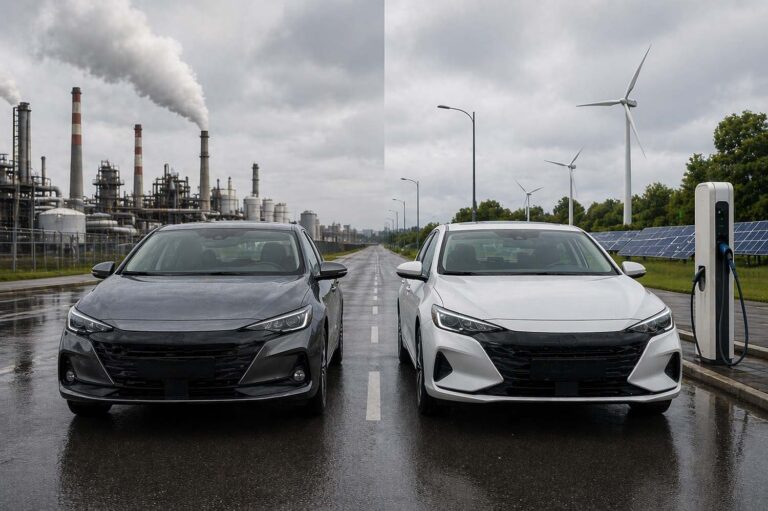
What’s the Difference Between Hybrid and Electric Cars?
The auto market offers two distinct paths toward cleaner driving. A hybrid car combines a gasoline engine with an electric motor to boost fuel economy well beyond a comparable gas-only model. An electric vehicle runs a large battery through an electric motor with no combustion engine and zero tailpipe emissions. Knowing the difference between these two options shapes every buying decision, from the first budget estimate to long-term battery costs.
Every smart buyer looks into a car’s past before committing to a used hybrid or electric vehicle. VinGurus makes that step simple, so it pays to check a used car’s history first and see what the seller left out. A VIN-based lookup can surface odometer rollbacks, accident records, branded titles and ownership patterns on almost any car. Skipping the check on a plug-in hybrid or EV risks hidden electrical damage that no sticker price reflects.
How a Hybrid Car Works
A hybrid car runs a gas engine alongside an electric motor and a battery that recharges through regenerative braking. Standard hybrids (HEVs) never need an external outlet because the car restores battery charge during deceleration automatically. This regenerative cycle gives a hybrid its defining fuel economy edge in dense urban traffic, where a standard gasoline engine keeps burning fuel at every red light.
The electric motor carries the car through low-speed movement while the engine kicks in when power demand rises. Fuel savings appear steadily across a hybrid driver’s daily route. A hybrid that commutes through stop-and-go traffic delivers mileage numbers that impress even experienced gas station regulars.
Plug-In Hybrid Vehicles and Their Real Advantages
A plug-in hybrid carries a larger battery than a standard hybrid. Plug-in hybrids (PHEVs) offer genuine electric-only range, typically a few dozen miles depending on the model, before the gasoline engine wakes up. For many drivers, that range covers a typical day of errands and commuting without burning a drop of fuel.
A plug-in hybrid needs an outlet or a charging station to charge the battery fully between trips. PHEV drivers who charge overnight save money on fuel because electric driving replaces gasoline on daily routes. A PHEV also removes range anxiety by keeping the combustion engine ready for any longer run.
Two PHEV designs define the market. Parallel plug-in hybrid setups drive the wheels through the combustion engine and the electric motor working together. Series PHEVs use the electric motor alone while the engine generates electricity for the battery. Both designs cut emissions well below gas-powered vehicles.
Electric Vehicles and Battery Technology
An electric vehicle stores energy in a large battery and channels it through an electric motor directly to the wheels. No internal combustion engine sits under the hood. That absent gas engine means fewer moving parts, which generally lowers routine maintenance costs compared with a gas-powered car. According to the U.S. Department of Energy, all-electric vehicles typically need less upkeep because they have fewer moving parts and less fluid to service.
Battery capacity, measured in kilowatt-hours, determines the driving range of each EV. Early mass-market models showed that all-electric driving could meet real-world expectations at scale. For many drivers, overnight home charging covers daily needs without gasoline, and electricity costs per mile usually stay below gasoline equivalents.
Power Delivery and Performance Compared
Power in a hybrid car arrives from both the electric motor and the gas engine coordinating smoothly. The electric motor handles torque at low speeds and the engine takes over at highway demand. An EV produces its power instantly because the electric motor delivers peak torque from a full standstill with no lag.
| Feature | Hybrid | Plug-In Hybrid | Electric Vehicle |
|---|---|---|---|
| Battery size | Small | Medium | Large |
| Gas engine present | Yes | Yes | No |
| Electric motor | Yes | Yes | Yes |
| Requires charge | No | Yes | Yes |
| Tailpipe emissions | Reduced | Very low | Zero |
A hybrid car stays practical for any driver who wants fuel savings without adjusting to a daily charging routine. An EV rewards drivers who map their life around home charging access and shorter-distance commutes.
Fuel Economy and Real Savings
Fuel economy in a hybrid typically beats a comparable gasoline car in mixed city traffic. Regenerative braking feeds captured energy back into the battery at every slowdown, and a hybrid driver watches fuel bills shrink week after week through steady energy recovery. Driving style matters too, since hard braking and rapid acceleration can noticeably cut mileage, a point covered in this look at how mindful driving saves money and stress. Those savings compound into real money across a full ownership cycle.
The cheapest car to own is the one that matches how you actually drive.
A plug-in hybrid saves more for short-commute households. Electric driving handles the daily route and the fuel-efficient gasoline engine activates only beyond battery range. Fuel costs drop sharply for any PHEV owner charging at home every night. Depending on where you live, state, local, or utility incentives may reduce the overall cost further.
An EV delivers the lowest per-mile fuel cost of any car. The incentive picture has changed, though. The federal new clean vehicle credit of up to $7,500 is no longer available for vehicles acquired after September 30, 2025, according to the IRS. That makes the sticker price gap against hybrid models more important than it used to be, so check which state or local rebates still apply to you before assuming an EV pencils out. Lower fuel and maintenance costs can still add up over years of ownership.
Charging From Outlet to Station
To charge an EV’s battery at home, drivers use a standard outlet for overnight restoration or install a Level 2 charging station for faster results. A public charging station supports longer journeys away from home. Three charge tiers define current EV infrastructure:
|
1
|
Level 1 home outlet: slow charging that is often enough for an overnight daily top-up |
|
2
|
Level 2 home or public charging station: faster charging, often four to eight hours for a full charge |
|
3
|
DC fast charger at a dedicated station: often 80 percent charge in under an hour |
Plug-in hybrid charging takes less time because the battery is smaller. A standard plug-in session at home fills a PHEV overnight without any special equipment. An EV driver who plans to drive long distances must map charging station stops carefully before a road trip to avoid waiting in unfamiliar areas, and the usual road trip planning tips on routes, rest stops, and pre-trip checks apply just as much to a battery as to a gas tank.
Hidden Risks Every Buyer Should Know
Battery degradation hides inside every hybrid and electric vehicle quietly. A worn battery holds less charge, and the car loses electric driving range year after year. According to Kelley Blue Book, replacing a failed hybrid battery runs roughly $2,000 to $8,000 depending on the model, and an EV battery pack replacement costs considerably more.
A clean-looking body can hide an expensive electrical history.
Electrical system faults sit invisibly behind clean body panels in flood-damaged cars. Routine maintenance costs stay low thanks to fewer moving parts, but battery repairs demand specialist tools beyond most local garages. Mileage fraud affects used EV listings just as it affects gas-powered vehicles. Battery manufacturing and disposal also add to lifecycle emission totals that buyers rarely consider upfront. And if the best listing is in another state, factor in the cost and time of shipping a vehicle across the country before you commit.
Key risks to verify before any hybrid or EV purchase:
- Battery replacement and health history
- Flood or fire damage in official records
- Salvage or rebuilt title status
- Active recalls from the manufacturer
- Odometer consistency across all service documents
Which Car Matches Your Real Life
A driver who plans to drive long distances regularly benefits from a plug-in hybrid over a full EV because the fuel-efficient gasoline engine covers any range beyond the battery without hesitation. Urban drivers with home outlet access and short commutes extract maximum value from all-electric driving in a full EV. A standard hybrid suits anyone seeking improved fuel economy without committing to a daily charging routine.
The right auto decision also involves financial planning:

Money questions to answer before you buy:
- Sticker price after any rebates still offered in your state
- Long-term fuel cost difference between hybrid and EV ownership
- Battery degradation risk across a ten-year horizon
- Available state, local, and utility incentives for your location and vehicle type
- Charging station access near your home and workplace
Quick match:
- Focused on environmental impact: an all-electric vehicle for zero tailpipe emissions
- Want fuel flexibility and distance capability without range anxiety: a plug-in hybrid
- First-time buyer wanting a low-risk entry into cleaner driving: a gas-powered hybrid over a gas-only car, where you will notice the difference right away
Conclusion
The hybrid vs electric decision reflects real-life priorities rather than marketing claims. A hybrid delivers proven fuel economy and regenerative braking savings without any plug. A plug-in hybrid bridges both worlds with electric-only range and a combustion engine standing by for every situation. An electric vehicle offers the cleanest result with fewer moving parts and typically lower maintenance costs across ownership. Check every used car’s history before buying, because hidden battery faults or electrical damage can cost far more than any incentive recovers.
FAQ
Can a plug-in hybrid fully charge its battery through regenerative braking alone while driving?
Regenerative braking partially restores battery charge during driving but only maintains a low level. Full electric-only range requires charging through an outlet or a dedicated station. Relying on braking alone leaves the battery well below its peak capacity.
Does regenerative braking wear out brake pads faster or slower than standard systems?
Regenerative braking extends physical brake life because the electric motor slows the car first and the friction brakes engage far less often than in a gas-only car. The Department of Energy notes that brakes on hybrids and plug-in hybrids typically outlast those on gas-only cars, and that brake wear in all-electric vehicles is significantly reduced.
Why do insurance premiums sometimes run higher for EVs than for hybrid models?
Insurance providers often price EV policies higher because battery replacement costs and specialized repair requirements raise potential claim values. A damaged EV battery assembly can cost more than the entire repair bill for a comparable hybrid or combustion-engine car.
Is buying a used hybrid from a fleet or rental company a hidden risk?
Fleet and rental hybrid cars can accumulate heavy mileage under demanding conditions, and battery cycles add up faster under frequent short trips and rapid charging. A vehicle history report showing prior rental or taxi use signals the kind of heavy use that a test drive rarely reveals.
Do older hybrid models still retain enough battery capacity to justify a used purchase?
Hybrid batteries commonly last at least ten years, or roughly 100,000 to 150,000 miles, and federal rules require battery warranty coverage of at least 8 years or 100,000 miles, with some states and manufacturers going further. Documented service history and consistent odometer records indicate responsible care. A used hybrid with a known battery replacement history at a qualified dealer carries lower risk than an untested private sale.

Better Living may earn commissions through affiliate links and may occasionally feature sponsored or partner content. If you make a purchase through our links, we may receive a small commission at no cost to you.