
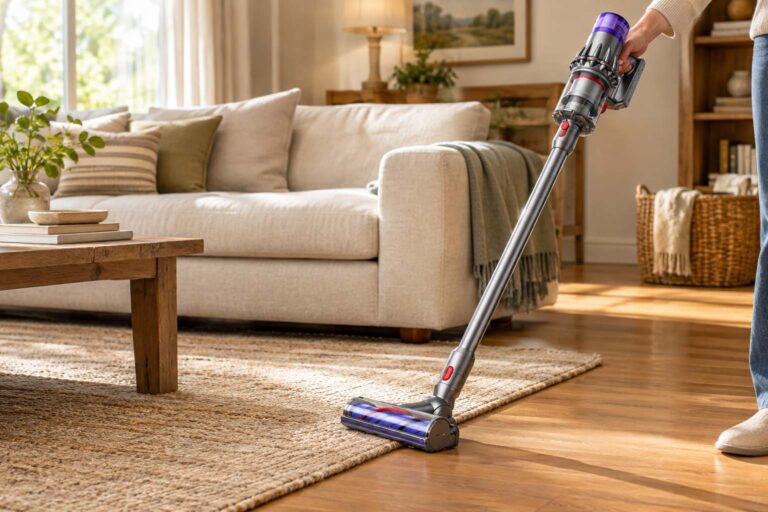
Indoor dust is more than a cosmetic nuisance. Settled dust can contain or carry particles such as dust-mite debris, pollen, pet dander, and mold spores, all of which may affect comfort and, for sensitive individuals, respiratory health. Improving indoor air quality isn’t about finding one magic fix; it depends on a combination of source control, ventilation, and regular cleaning. For routine floor or upholstery cleaning, many households find that a cordless vacuum offers a convenient way to reach various surfaces without the hassle of cords, though it’s simply one tool among many rather than a complete solution. Regular cleaning can meaningfully reduce dust and allergens, but it cannot eliminate every airborne or settled pollutant in a home.
Key takeaway: Effective dust control combines frequent removal, damp cleaning, ventilation, and moisture management, not any single method alone.
Why Household Dust Matters
What Dust Can Contain
Household dust is a mixture of many things: soil and outdoor particles tracked in on shoes, pollen, pet dander, dust-mite allergens, fabric fibers, and sometimes mold spores or other biological material. How much this mixture affects health depends on the specific pollutant, its concentration, and an individual’s sensitivity. Not all household dust poses a health risk, and no amount of cleaning can prevent every respiratory condition, but reducing dust buildup is still a reasonable, evidence-supported goal for most homes. According to the American Lung Association, roughly four in five U.S. homes have detectable dust-mite allergen in at least one bed, which is part of why dust mites remain one of the most common indoor asthma and allergy triggers.
How Cleaning Affects Airborne Particles
Sweeping, dry dusting, or vacuuming can temporarily stir up settled particles, sending them back into the air before they eventually resettle. Damp cloths, damp mops, or dusters designed to trap particles tend to minimize how much material gets kicked up in the process. It helps to distinguish between reducing dust accumulation, which cleaning does fairly well, and purifying indoor air, which calls for different strategies like ventilation and filtration. According to the U.S. Environmental Protection Agency and the American Lung Association, both approaches play complementary roles in creating healthier indoor environments.
Start With Source Control
Reduce What Enters the Home
Preventing pollutants from entering in the first place is often more efficient than repeatedly chasing them down later. Simple measures include placing mats at exterior doors, encouraging household members to remove shoes near entrances, cleaning or replacing those mats regularly, and wiping pets’ paws when they come inside. Decluttering helps too, since it makes high-dust areas easier to clean and cuts down on hidden accumulation in corners and under furniture.
Picture two entryways: one with no mat, where family members walk straight in wearing outdoor shoes, and another with a mat-and-shoes-off routine firmly in place. Over time, the second household tends to see noticeably less dirt tracked throughout the home, which lightens the cleaning load everywhere else.
Manage Moisture Promptly
Leaks, condensation, and lingering dampness can support mold growth, which adds its own particles to household dust. Practical checks include repairing visible leaks, drying wet materials promptly, improving airflow in damp rooms, and running bathroom and kitchen exhaust fans vented outdoors where available. Visible mold or substantial water damage may call for professional assessment, particularly when the affected area is large or occupants have respiratory sensitivities. Many of the same early warning signs, like a stain that keeps returning after cleaning or a musty smell that won’t go away, are worth checking even outside the rooms you’d normally suspect.
Build a More Effective Cleaning Routine
Clean From High Surfaces to Low Surfaces
A logical cleaning sequence, dusting shelves, ledges, and furniture first, moving to upholstery and soft furnishings next, and finishing with floors, keeps falling dust from resettling onto areas you’ve already cleaned. Damp microfiber cloths or similar tools that actually capture dust, rather than just pushing it around, tend to work better than dry dusters.
Match the Method to the Surface
Different surfaces call for different approaches. Hard floors benefit from appropriate vacuuming or sweeping followed by damp mopping when suitable. Carpets and rugs need regular attention, especially near entrances and in high-traffic zones, following whatever care instructions the manufacturer provides. Upholstery and fabric items should be checked for care labels, with removable covers washed whenever that’s permitted. High-touch surfaces deserve attention as well, though it’s worth distinguishing ordinary cleaning from disinfection; save disinfecting products for situations where they’re genuinely needed.
Handle Vacuuming Thoughtfully
Vacuuming removes settled material from floors and fabrics, but how well it works depends heavily on equipment maintenance and filtration. Following the manufacturer’s instructions, emptying or replacing collection systems safely, and cleaning or replacing filters as directed all matter more than people often assume. Avoid operating damaged equipment. People who are particularly sensitive to allergens may prefer to leave the room during vacuuming and return once disturbed particles have had time to settle.
Cleaning reduces dust; it does not eliminate every pollutant.
A handful of habits make a meaningful difference: clean high surfaces before floors, use damp methods to limit dust disturbance, and maintain filters according to the manufacturer’s instructions.
Improve Ventilation Without Creating New Problems
Ventilation and filtration serve different purposes. Ventilation exchanges indoor air with outdoor air, while filtration removes some particles from air that’s already inside. Opening windows or doors when outdoor conditions permit, and when doing so won’t worsen exposure to smoke, outdoor pollution, pollen, or extreme temperatures, can genuinely help. Kitchen and bathroom exhaust fans that vent outdoors are valuable for the same reason. Air fresheners and fragrances, despite common assumptions, don’t improve air quality at all; they simply add more substances to it. Regular maintenance of heating, cooling, and air-cleaning equipment according to manufacturer guidance supports better indoor air over the long run, a concern that comes up especially often in older homes with aging HVAC systems and limited ventilation.
There’s no universal ventilation schedule, since conditions vary by climate, building design, outdoor pollution, and occupant health needs. Portable air cleaners, when used, should be appropriately sized and well-maintained; think of them as a complement to source control and cleaning, not a replacement for either.
Adapt the Routine to Different Household Needs
Homes with pets often see dust and allergen buildup around pet beds, upholstery, rugs, and entryways. Laundering washable bedding and cleaning high-traffic areas more frequently helps, though no amount of cleaning will remove every trace of pet allergen from fabrics and surfaces.
Allergy- or asthma-sensitive households benefit from prioritizing low-dust techniques and laundering bedding on a regular schedule. Allergen-proof mattress and pillow encasements are a reasonable additional measure. Anyone dealing with persistent or severe symptoms should consult a qualified healthcare professional rather than relying solely on cleaning adjustments.
Small homes and busy households often fare better with a short, repeatable routine focused on high-impact areas rather than occasional marathon cleaning sessions. Keeping tools within easy reach and dividing tasks by room or day supports consistency over perfection.
Quick checklist:
- Daily or frequent: Wipe entryways, shake out mats, tidy high-traffic surfaces.
- Weekly: Vacuum floors and upholstery, launder bedding, dust shelves.
- As needed: Clean filters, address spills or leaks, deep-clean rugs.
Common Mistakes to Avoid
Several habits undermine otherwise good intentions: dry-dusting in ways that just redistribute particles, vacuuming without maintaining filters or collection compartments, cleaning only visible surfaces while ignoring upholstery and bedding, using excessive or mixed cleaning chemicals, blocking ventilation grilles, and neglecting HVAC filter changes. It’s also worth resisting the assumption that any single tool, a vacuum, an air cleaner, a fragrance product, can substitute for addressing underlying leaks, mold, smoke, or other pollution sources. If dust keeps coming back no matter how often you clean, it’s worth stepping through the most common reasons a house stays dusty to rule out a cause you haven’t considered yet.
Suggested Sources and Verification Standards
Reliable information on indoor particulate matter, ventilation, moisture, and vacuuming guidance is available through the U.S. Environmental Protection Agency. The American Lung Association offers broader guidance on household dust and indoor-air-quality considerations. Manufacturer instructions remain the best source for equipment-specific maintenance details. Technical claims, especially those involving HEPA filtration, allergen reduction, mold, asthma, or respiratory health, should always be verified against current public-health guidance before you act on them. Recommendations may also vary for people with diagnosed allergies, asthma, or other respiratory conditions, so individual circumstances matter.
A Practical Home Dust-Control Routine
A straightforward, repeatable sequence can anchor an effective routine. Each step builds on the one before it, so working through them in order gets more out of the same amount of effort:
|
1
|
Reduce tracked-in dirt at entrances with mats and a shoes-off habit. |
|
2
|
Address leaks and dampness promptly to limit mold growth. |
|
3
|
Dust with a damp or particle-trapping tool, working from high surfaces to low. |
|
4
|
Clean floors and upholstery on a consistent schedule. |
|
5
|
Wash bedding and fabric items according to care instructions. |
|
6
|
Vent kitchens and bathrooms outdoors where possible. |
|
7
|
Maintain filters and cleaning equipment according to manufacturer guidance. |
Holiday hosting is one of the few times most households already do a top-to-bottom deep clean, which makes it a natural moment to run through this routine in full. A Thanksgiving home cleaning checklist or a Christmas home cleaning checklist already breaks the work into a day-by-day timeline, so folding in a filter check or a quick look for hidden moisture costs very little extra time while the rest of the house is getting attention anyway.
A Healthier Indoor Environment Starts With Consistent Habits
Indoor-air quality is shaped by multiple factors, including dust, moisture, ventilation, combustion sources, and outdoor pollutants. The most dependable approach is layered: prevent unnecessary contamination, remove settled dust carefully, ventilate appropriately, control moisture, and keep equipment well-maintained. No home needs a flawless cleaning routine. A consistent, evidence-informed approach that targets the main sources of dust tends to deliver more practical value over time than occasional bursts of intensive cleaning.

Better Living may earn commissions through affiliate links and may occasionally feature sponsored or partner content. If you make a purchase through our links, we may receive a small commission at no cost to you.