
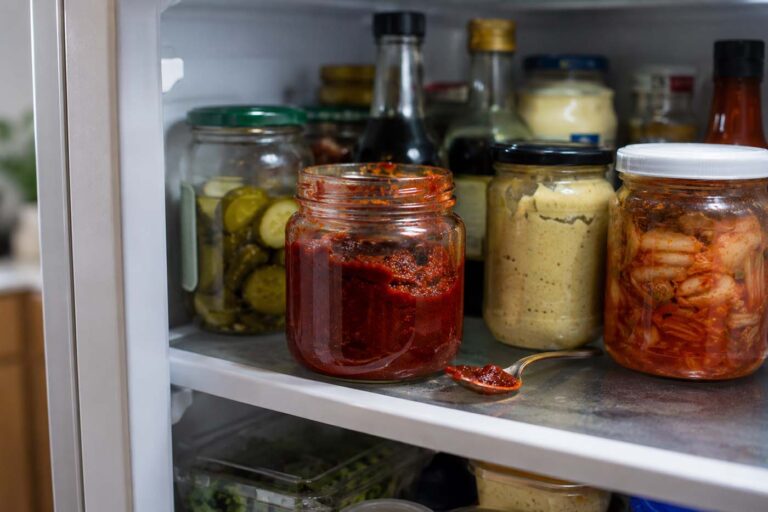
For centuries, gochujang was fermented outdoors in large earthenware pots called onggi, sitting through summer heat and winter cold with no refrigerator anywhere near it. That history is part of why the question of whether it needs the fridge today doesn’t have a simple yes or no answer, it depends on what you’re actually trying to protect: safety, or the flavor and color that make gochujang worth using in the first place. This guide is part of our broader approach to food storage, built on primary and peer-reviewed sources rather than guesswork.
Does gochujang need to be refrigerated?
The short answer: Not before opening, and not strictly for safety even after. An unopened jar is stable in a cool pantry because of its salt content, ongoing fermentation, and sugar, the same combination covered in our guide on whether gochujang goes bad. Once opened, refrigeration is the standard, sensible recommendation, mainly because cold slows continued fermentation and oxidation, which is what protects gochujang’s color, flavor, and texture over time, not because an unrefrigerated jar is unsafe on its own. Homemade and small-batch gochujang are the exception worth taking more seriously, since they don’t go through the same controlled process commercial jars do.
If you keep miso paste in your fridge for the same reasons, the logic is nearly identical, both are salted, fermented pastes that rely on the same basic preservation chemistry covered in our roundup of foods that last longer than you think.
📋 Does Gochujang Need to Be Refrigerated: At a Glance
| Unopened jar | Pantry is fine, refrigeration not required |
| Opened jar | Refrigeration recommended for quality, not strictly for safety |
| What the fridge actually protects | Color, flavor balance, and texture, by slowing fermentation and oxidation |
| Homemade or small-batch jars | Refrigerate promptly; treat with more caution than commercial jars |
| Opened, refrigerated shelf life | Commonly several months to about a year in an airtight container |
| Traditional storage method | Earthenware onggi pots on a raised outdoor platform, in full sun, for months |
🔑 Key Takeaways
- Gochujang’s shelf stability before opening comes from salt, active fermentation, and sugar working together, not from refrigeration, which is why it’s sold unrefrigerated in stores.
- Refrigeration after opening is a quality decision, not strictly a safety one. Cold slows the continued fermentation and oxidation that would otherwise darken the color and shift the flavor.
- A closely related Korean fermented paste, doenjang, is directly addressed in peer-reviewed research recommending refrigerated storage once it’s in a more perishable, higher-moisture, opened state, the same basic logic applies to gochujang.
- Homemade and cottage-industry gochujang don’t get the same benefit of the doubt as commercial jars. Peer-reviewed research has specifically flagged that bacterial contamination risk in small-batch gochujang production hasn’t been well studied.
- Traditional Korean gochujang was fermented and stored for months in unrefrigerated earthenware pots, proof that refrigeration was never the thing keeping it safe in the first place, even though it’s a smart modern habit for quality.
Why Refrigeration Isn’t Required Before Opening
🔬 The Mechanism: Salt and Fermentation Already Did the Work
A 2020 peer-reviewed study in Frontiers in Microbiology measured Korean gochujang samples at an average water content around 40 percent, with salt levels commonly falling between 5 and 12 percent depending on the producer. That combination, salt, ongoing fermentation by salt-tolerant microbes, and sugar, is what keeps an unopened jar stable at room temperature, the same reason it sits on an unrefrigerated grocery shelf next to other shelf-stable condiments. Refrigeration isn’t what’s protecting it before you open it; the fermentation chemistry already did that.
What Refrigeration Actually Does After Opening
Once a jar is open and exposed to air, two slow processes keep running: fermentation continues, and oxidation sets in. Both affect quality more than safety. Continued fermentation gradually shifts the flavor, more tang, more heat, less of the initial balance, while oxidation dulls the color and can flatten the aroma. Cold temperature slows both processes down, which is the actual reason refrigeration is the standard recommendation once a jar is opened, not because room temperature storage makes it unsafe. Handled this way, an opened jar commonly stays good for several months to about a year in the fridge; our gochujang shelf life guide has the fuller breakdown by storage method.
Gochujang doesn’t have deep peer-reviewed research specifically on refrigeration after opening, but a closely related Korean fermented paste does. Doenjang, a soybean paste made from the same meju starter tradition, has been directly studied on this point: research on doenjang notes that once it reaches its higher-moisture, finished state, it is more vulnerable to microbial spoilage and is typically recommended for refrigerated storage. Gochujang isn’t identical to doenjang, its chili, rice, and lower moisture content give it its own profile, but they share the same fermentation foundation, and the same basic logic, cold storage protects a fermented paste once it’s past its most stable, sealed state, applies reasonably to both.

⚠️ Homemade Gochujang Should Be Refrigerated, Without Exception
Commercial gochujang is made under controlled, regulated conditions with consistent salt levels, and some producers add small amounts of alcohol during packaging specifically as an added safeguard against microbial activity. A 2022 peer-reviewed study on cottage-industry gochujang specifically flagged that contamination risk from bacteria like Bacillus cereus in small-batch production has not been well studied, unlike commercial gochujang. If you’re making your own, refrigerate it promptly after it’s finished fermenting and don’t rely on room-temperature pantry storage the way you reasonably could with a factory-made jar.
💡 What the Onggi Tradition Actually Tells You
Traditional gochujang fermented for months, sometimes years, in unrefrigerated earthenware pots outdoors is real evidence that refrigeration was never the mechanism keeping it safe. It’s worth reading correctly, though: those pots, called onggi, sat on a raised outdoor platform called a jangdokdae, deliberately placed in direct sun and open air rather than hidden away somewhere cool. Sunlight exposure was part of what developed the flavor, not something the process avoided. That’s a different tradition from kimchi, which was historically buried in the ground to stay cold through winter. It’s a useful historical fact about how the food works, not a suggestion to skip your own fridge once a jar is opened and in regular use.
Frequently Asked Questions
For a short period, generally yes, its salt and fermentation provide real protection. For ongoing storage, refrigeration is still the better call, mainly to protect color and flavor by slowing continued fermentation and oxidation, not because room temperature makes it unsafe outright.
Mostly the second one. Refrigeration slows the natural darkening and flavor drift that comes from continued fermentation and oxidation, which is a quality timeline more than a safety one, since the paste’s salt and fermentation already provide the safety margin.
Because an unopened, sealed jar is genuinely stable at room temperature, that’s what makes shelf display possible in the first place. The refrigeration recommendation kicks in specifically once it’s opened and repeatedly exposed to air.
Yes, without the same leeway commercial jars get. Peer-reviewed research on cottage-industry gochujang has specifically noted that contamination risk from bacteria like Bacillus cereus in small-batch production hasn’t been well studied, so refrigerate homemade batches promptly rather than treating them like a factory-made jar.
Traditional onggi fermentation used purpose-built earthenware pots set on a raised outdoor platform in direct sun and open air, deliberately, since sunlight helped develop the flavor. That’s different from kimchi, which was historically buried in the ground to stay cold through winter. Either way, it’s genuine evidence that refrigeration isn’t what makes gochujang safe, but it’s not a practical argument for skipping your own fridge once a jar is opened regularly.
Yes, and it’s a reasonable option if you buy a large jar and use it infrequently. Freezing slows fermentation and oxidation even further than the fridge does, though the texture can thin out slightly once thawed.
Treat it more conservatively. Diluting the paste with oil and other ingredients changes its salt and fermentation concentration, so a gochujang-based sauce doesn’t necessarily carry the same built-in protection as the concentrated paste, refrigerate it and use it within a shorter window.
It slows the process rather than stopping it entirely. Oxidation and continued fermentation are ongoing chemical processes that cold storage delays, not something refrigeration switches off completely, so some gradual darkening over many months is still normal even in the fridge.
Not typically for safety, since the sealed jar and its salt and fermentation content handle that. Very high, sustained heat can speed up quality changes even in a sealed jar, so moving it somewhere cooler helps preserve flavor, but it’s not the same as a safety requirement.
It slows the fermentation that produces the gas behind bulging, but it doesn’t eliminate it, gochujang is still a living, actively fermenting food in the fridge, just a slower-moving one. A slightly domed lid now and then is still within normal range even for a refrigerated jar.
A standard refrigerator setting, at or below 40°F, is enough. There’s no need for anything colder or more precise; gochujang isn’t sensitive to small temperature swings the way a genuinely perishable food would be, since its salt and fermentation already provide a real safety margin on top of whatever the fridge is doing.
This article summarizes general food safety information drawn from peer-reviewed food science research and standard fermented-food storage practice. It is meant to help you make an informed decision, not to replace your own judgment or the instructions on your product’s label. If gochujang shows mold, a foul smell, or a watery, slimy texture, discard it regardless of what this guide says about typical storage.
Better Living may earn commissions through affiliate links and may occasionally feature sponsored or partner content. If you make a purchase through our links, we may receive a small commission at no cost to you.