
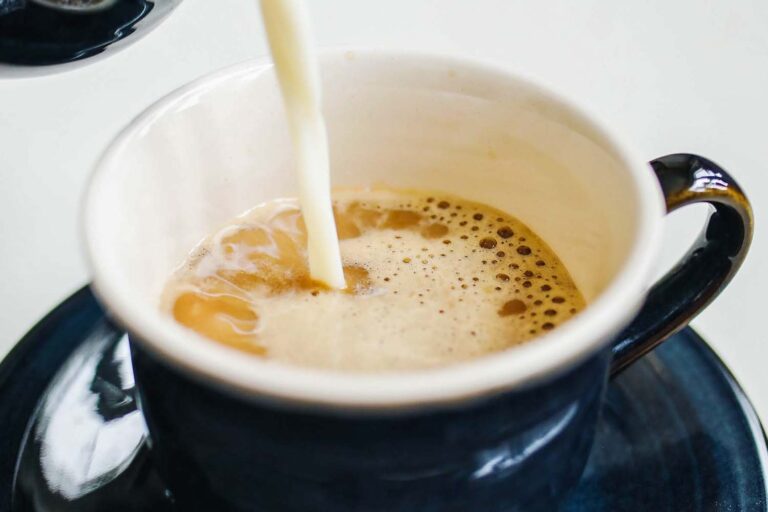
Yes, Coffee-mate goes bad, but a canister of powder and a bottle of liquid creamer run on very different clocks. Here is what Nestlé’s own pages say for each format, where they disagree, and where we found nothing.
Does Coffee-mate go bad?
The short answer: Yes. Nestlé Professional says its foodservice powder keeps its flavor for up to 24 months at room temperature, and its foodservice liquid singles keep up to 9 months without refrigeration. Nestlé’s retail pages say to refrigerate liquid bottles after opening and use them within 14 days for best quality. Opened powder has no Nestlé figure, so keep it dry and closed.
For a complete pantry storage reference, see our Food Storage Guide.
📋 Does Coffee-mate Go Bad: At a Glance
| Powder (unopened) | Nestlé Professional (foodservice canister): flavor holds up to 24 months at room temperature (730 days), no refrigeration needed |
| Powder (opened) | We found no Nestlé figure. Keep it dry, cool and closed (ours) |
| Liquid bottle (opened) | Nestlé’s retail pages: refrigerate and use within 14 days. A brand answer says that is for best quality |
| Liquid singles | Nestlé Professional (foodservice): up to 9 months (270 days), no refrigeration needed |
| Pump bottle (opened) | Nestlé Professional (foodservice): one month (30 days), and do not refrigerate |
| Natural Bliss | Dairy version: keep refrigerated, no days found. Oat milk version: use within 14 days of opening (H-E-B listing) |
| Signs of trouble | No Nestlé source lists them. Sour smell, mold, insects or a damp, solid powder are our reasons to discard (ours) |
Key Takeaways
- Yes, Coffee-mate goes bad, but how fast depends on the format. Powder, liquid bottles, singles and pump bottles all run on different clocks.
- Nestlé Professional says its powder is shelf stable, with flavor holding at room temperature for up to 24 months. It says to store it in a cool, dry, odorless place away from direct sunlight.
- Nestlé’s retail pages say to refrigerate liquid bottles after opening and use them within 14 days. A brand answer on Target frames the 14 days as a recommendation for best quality, and says unmarked bottles must be refrigerated both before and after opening.
- Nestlé Professional gives 9 months (270 days) for liquid singles and for its concentrate pump bottles. Those are foodservice products. Once a pump bottle is opened, it gives one month and says not to refrigerate it.
- Natural Bliss comes in a dairy version and an oat milk version. H-E-B’s oat milk listing says keep refrigerated at 33 to 45°F and use within 14 days of opening. Its dairy listing gives no days.
- We found no Nestlé source on the signs that creamer has spoiled, on illness from old creamer, or on how long opened powder lasts. Our suggestions are labeled (ours).
- Curdling in your coffee is not always spoilage. Nestlé Canada calls it feathering, a harmless physical reaction, but says nothing about a bottle that is lumpy or smells sour on its own.
- Competing pages print one number for all Coffee-mate. The ones we read mostly don’t tie it to a specific Nestlé product page.
Read the package first. A bottle in the dairy aisle, a canister in the coffee aisle, a box of singles and a pump bottle from an office supply order are four different products. If you’re asking about the fridge, see whether Coffee-mate needs to be refrigerated. We’d also treat Natural Bliss as its own case. H-E-B’s Sweet Cream listing shows skim milk and cream, and a separate H-E-B listing shows an oat milk version.
Which Coffee-mate Do You Have?
Start with the package in front of you, because the answer changes by format. These are Nestlé’s stated shelf lives and storage advice, not guarantees, and the liquid bottle answers come from retailer pages.
| Format | Unopened | After opening | Source |
|---|---|---|---|
| Powder canister (foodservice) | Flavor holds up to 24 months at room temperature (730 days). Shelf stable, no refrigeration needed | No figure found. Store cool and dry (ours) | Nestlé Professional |
| Retail powder canister | Page says shelf stable and to store in a cool, dry place. No days given | No figure found | Walmart, H-E-B listings |
| Liquid bottle (retail) | Refrigerate per the bottle. Brand answer: unmarked bottles must be refrigerated at all times | Use within 14 days for best quality, refrigerated | H-E-B, Target (Nestlé answers) |
| Liquid bottle marked ‘Refrigerate After Opening’ or sold as shelf stable | May be kept in a dry, cool place before opening, per a brand answer and a Walmart listing | Refrigerate and use within 14 days | Target (Nestlé answer), Walmart |
| Natural Bliss, dairy (skim milk and cream) | Keep refrigerated | No figure found | H-E-B listing |
| Natural Bliss, oat milk | Keep refrigerated at 33 to 45°F. Do not freeze | For best quality, use within 14 days of opening | H-E-B listing |
| Oat milk bulk liquid (foodservice, 3 x 128 oz) | Shelf stable at room temperature for 6 months (180 days) unopened | Refrigerate. Good 7 days after opening | Nestlé Professional |
| Liquid singles (foodservice) | Up to 9 months (270 days). No refrigeration needed | Single serve, so none applies (ours) | Nestlé Professional |
| Concentrate pump bottle (foodservice) | Up to 9 months. Do not refrigerate or freeze | One month (30 days). Do not refrigerate | Nestlé Professional |
| Bulk liquid (192 oz, for machines) | 270 days at room temperature, unopened | Chill to 32 to 40°F, use within 7 days | Nestlé Professional |
How Long Does Coffee-mate Powder Last?
Nestlé Professional says its powder keeps up to 24 months at room temperature unopened. We found no Nestlé figure for an opened canister.
Nestlé Professional’s powder canister page (page footer 2026) calls the canister “shelf stable with no refrigeration needed.” It says the flavor holds at room temperature for up to 24 months. It lists a shelf life of 730 days. It says to store the product in a clean, cool, dry and odorless place, away from direct sunlight and freezing temperatures. The listed range is a maximum of 86°F and a minimum of 43°F.
Nestlé Professional’s bulk powder page gives the same 24 months and 730 days. It says “No refrigeration needed,” “Do not freeze” and to store it in a cool, dry place, with shipping and storage between 35°F and 80°F.
Neither page says what date the 24 months counts from, or whether the date is about quality or safety. It also gives nothing for a canister that has been opened. Retail listings, such as Walmart’s Coffee-mate Original powder listing and H-E-B’s powder listing, say to store the creamer in a cool, dry place and call it shelf stable. They give no best-by or after-opening guidance either.
So for opened powder, we’re left with general reasoning (ours). Moisture and pests are the realistic risks. University of Maryland Extension’s kitchen and pantry pests page says insects can chew through plastic bags and cardboard boxes, and recommends tight-fitting lids. UC IPM’s pantry pests page says webbing or tiny holes in a container are signs of infestation. USDA’s commodity specification for dry non-dairy creamer caps moisture at 3.0 percent. That is a purchasing specification for buyers, not storage advice, but it shows why a damp canister is a poor sign. Keep the lid on, use a dry scoop, and keep the canister away from the stove, the kettle and the dishwasher vent (ours).
How Long Does Liquid Coffee-mate Last?
Nestlé’s retail pages say to use an opened liquid bottle within 14 days, refrigerated. We found no unopened shelf life for retail bottles.
H-E-B’s Coffee-mate Original listing (accessed October 2026) tells shoppers to pop the creamer in the fridge after opening and use it within 14 days. The page says nothing on an unopened shelf life or expiration date. Nestlé’s answers on Target’s Hazelnut listing say the same. Keep it cool in the fridge for up to 14 days after opening. The Q&A on those pages is retailer-hosted, and the brand answers are dated roughly four years ago on the page. Nestlé’s own consumer site was blocked to us, so these are the closest brand statements we could read.
On the unopened question, the brand answer is more specific. It says a Coffee-mate item “must be kept refrigerated both before and after opening,” and that only liquid products clearly marked “Refrigerate After Opening” may be stored in a dry, cool environment before opening. It says products without that marking must be refrigerated at all times. For best quality, it recommends using the product within 14 days of opening. Walmart’s 16-ounce French Vanilla bottle listing fits that rule. It calls the creamer shelf stable and says to store it on shelves or in the pantry until you’re ready to open the bottle. It then says to put it in the fridge after opening and use it within 14 days. Check your bottle for that wording, because the bottles in a store differ.
Natural Bliss is a different product, and it comes in two versions. H-E-B’s Natural Bliss listing shows skim milk, cream, sugar and natural flavor. It says “Keep refrigerated” and gives no number of days for an opened bottle. H-E-B’s Natural Bliss oat milk listing says “Keep refrigerated” and “Do not freeze.” It also says to store it between 33°F and 45°F and, for best quality, to use it within 14 days of opening. Our guide to half-and-half covers a dairy product with similar ingredients, but it is not Nestlé guidance for Natural Bliss. For that bottle, follow the date and wording on the label (ours).
How Long Do Singles and Pump Bottles Last?
Nestlé Professional gives liquid singles up to 9 months unopened, and an opened concentrate pump bottle one month. Those are foodservice figures.
Nestlé Professional’s liquid singles page says the singles do not need to be refrigerated and can be kept for up to 9 months (270 days). It says to ship and store them between 50°F and 80°F, and its Q&A answers “No” when asked about refrigerating or freezing them. This is the foodservice case pack, not the box on a grocery shelf, and we found no consumer singles page with its own figure.
Nestlé Professional’s concentrate pump bottle page gives up to 9 months unopened. Once opened, it gives one month (30 days). It says to ship and store between 50°F and 80°F and “Do not refrigerate or freeze.” It tells staff to record the opening date on the label. Nestlé Professional’s bulk liquid page is the opposite case. It gives 270 days unopened at room temperature. The product is then chilled to 32 to 40°F and shaken before it goes into a dispenser. Once opened, it is kept refrigerated and used within 7 days.
Those three Nestlé Professional pages disagree with each other about the fridge, and with the consumer bottle answer. That isn’t an error. The products are different, so go by the page or label that matches what you bought. Nestlé Professional’s oat milk bulk liquid page gives its bulk oat milk creamer 6 months (180 days) shelf stable unopened, then refrigeration and use within 7 days once opened.
Does Coffee-mate Have an Expiration Date?
We found no Nestlé page that explains the date printed on a consumer bottle or canister, including whether it means best by, use by or expiration. The Nestlé Professional pages give shelf life in months or days, but don’t say what those numbers mean for safety. Nestlé Canada’s help article on curdling (February 2022, Canada) refers to a product that is not “past its expiry date,” so the date matters to Nestlé, but the article doesn’t say what to do after it.
We found no source on how long past the date Coffee-mate is still fine. Follow the date and the storage instructions on your package. We’d stop using a refrigerated bottle on its date. For powder past its date, we found no source saying it is fine, and a normal look doesn’t establish safety, so we lean toward replacing it (ours). Treat these as our reading, not Nestlé guidance.
How Can You Tell If Coffee-mate Is Bad?
We found no Nestlé page that lists the signs of spoiled creamer. Everything in this section is our own guidance (ours), built on general food safety rather than a creamer source.
For liquid creamer, watch for a sour or off smell, lumps or thick chunks that don’t smooth out when you shake the bottle, mold at the cap, or a bulging or leaking bottle. Pour a little into a clear glass and look at it before you decide. Don’t rely on smell alone to decide something is fine, and we don’t suggest tasting it. These are reasons to discard, not a safety test, because a bottle with none of them can still have been mishandled (ours).
For powder, the signs are different. Look for a damp or solid cake, a musty smell, mold, or webbing or tiny holes that point to pests. A few soft clumps that break apart are a quality issue, not a spoilage sign (ours).
One look-alike deserves its own section. If your creamer separates into flecks only once it hits the coffee, that is probably not spoilage. Nestlé Canada calls it “beverage feathering,” a harmless physical reaction that happens especially with very hot or strong coffee or tea, or very hard water. It says shaking the bottle and stirring can help, and that it doesn’t mean the product has gone bad, if the product is not past its expiry date. The article is from Nestlé Canada and mentions a bottle, so we apply it to liquid creamer only. That reassurance doesn’t cover creamer that is lumpy or smells off in the bottle, or that is past its date or its 14-day window.
Can Old Coffee-mate Make You Sick?
We found no Nestlé or agency source on illness from old Coffee-mate, in either form. We found no Coffee-mate recall in our search. For a perishable liquid, the safe approach is the general one: USDA’s leftovers guidance says perishable food left at room temperature for more than 2 hours, or 1 hour above 90°F, should be discarded. We apply that to a refrigerated bottle left on the counter (ours). USDA’s “Danger Zone” page explains the 40°F to 140°F range where bacteria multiply quickly.
Signs Something Is Actually Wrong
- A sour or off smell from liquid creamer in the bottle, not just in the coffee.
- Lumps or thick chunks in the bottle that don’t smooth out when you shake it.
- Mold on the cap, the spout or the surface of the creamer.
- A bulging or leaking bottle.
- Powder that is wet, solid or musty, or a canister with webbing or tiny holes.
- A refrigerated bottle left out for more than 2 hours, or 1 hour above 90°F.
These signs are our checklist (ours), built on general food safety and the USDA time limits above. We found no Nestlé page that lists them. A creamer that looks and smells normal can still be past its recommended use time, so smell alone isn’t a safety test. Don’t taste it to check.
Normal Things That Aren’t a Problem
- Flecks in your coffee when the creamer hits it. Nestlé Canada calls this beverage feathering, a harmless physical reaction.
- A powder canister with no refrigeration. Nestlé Professional says its powder is shelf stable and needs none.
- A creamer called non-dairy that lists a milk derivative. Nestlé Professional’s powder lists sodium caseinate and the Original liquid lists micellar casein, both described as milk derivatives.
- Singles and pump bottles kept out of the fridge. Nestlé Professional says refrigeration is not needed for singles and not wanted for pumps.
Quick Storage Reference
- Powder: Cool, dry, odorless place away from direct sunlight. Flavor holds up to 24 months per Nestlé Professional’s foodservice page. Keep the lid on.
- Liquid bottle: Follow the bottle. Refrigerate after opening and use within 14 days for best quality, per Nestlé’s retail pages.
- Natural Bliss: Keep refrigerated. The oat milk version says use within 14 days of opening.
- Singles: 50 to 80°F, up to 9 months, no refrigeration (foodservice pack).
- Pump bottle (foodservice): 50 to 80°F. Once open, one month. Do not refrigerate or freeze.
- Freezing: Nestlé does not recommend it for liquid creamer.
- Left out: Discard a refrigerated bottle after 2 hours, or 1 hour above 90°F (ours, from USDA).
| Situation | What to Do |
|---|---|
| Unopened powder canister bought a year ago, stored in the pantry | Within the 24 months Nestlé Professional gives for its powder’s flavor. Check that it’s dry and loose. |
| Powder canister opened 6 months ago, lid on, cool pantry | We found no after-opening figure. A dry, loose powder in a closed canister is a reasonable keep (ours). |
| Powder with soft clumps that break apart | Quality issue, not a spoilage sign. Keep the lid tight and the scoop dry (ours). |
| Powder that is wet, solid or musty | Discard it. Moisture and mold are our reasons, and the USDA purchasing spec caps moisture at 3.0 percent. |
| Canister with webbing or tiny holes | Discard it. UC IPM lists webbing and tiny holes as signs of pantry pests. |
| Unopened liquid bottle marked ‘Refrigerate After Opening’, in the pantry | Fine until opening, per a Nestlé brand answer. Refrigerate once opened. |
| Unopened liquid bottle with no such marking, left on a shelf | A Nestlé brand answer says unmarked bottles must be refrigerated at all times. Move it to the fridge and check the label. |
| Liquid bottle opened 10 days ago, kept in the fridge | Within the 14 days Nestlé’s retail pages give. |
| Liquid bottle opened 3 weeks ago, kept in the fridge | Beyond the 14 days Nestlé recommends for best quality. We found no source setting a safety cutoff, and smell alone isn’t a safety test. We’d replace it (ours). |
| Pump bottle opened 25 days ago | Within the 30 days Nestlé Professional gives for an opened pump bottle. |
| Singles box, 6 months from purchase, stored in a cabinet | Within the 9 months Nestlé Professional gives for liquid singles. Check any printed date. |
| Refrigerated bottle left on the counter overnight | Discard it. USDA says perishable food left out over 2 hours, or 1 hour above 90°F, should be discarded. |
| Creamer separates into flecks in hot coffee, bottle looks and smells normal | Nestlé Canada calls this beverage feathering, not a sign it has gone bad. Try a cooler coffee or stir in the creamer first. |
| Lumpy, thick or sour-smelling creamer in the bottle | Discard it (ours). That is different from flecks in the cup. |
| Liquid creamer that was frozen and thawed | Nestlé says it does not recommend freezing. We found no Nestlé guidance on thawing it. |
In October 2026 we read Nestlé Professional’s pages for the powder canister, bulk powder, liquid singles, concentrate pump bottle and bulk liquid. We read retailer listings for Coffee-mate powder at Walmart and H-E-B, liquid bottle listings at H-E-B, Target and Walmart, and the brand answers on Target’s Q&A. We read H-E-B’s Natural Bliss listings for the dairy and oat milk versions, Nestlé Professional’s oat milk bulk page and Nestlé Canada’s help article on curdling. We also read USDA’s commodity specification for dry non-dairy creamer, USDA’s leftovers and Danger Zone pages, and pantry pest guidance from the University of Maryland Extension and UC IPM. We read several competing articles on Coffee-mate storage. We did not research Cold Foam or limited-edition creamers, so follow their labels. Nestlé now styles the brand Coffee mate, and we use the hyphenated spelling most people search. We could not read Nestlé’s consumer FAQ because it blocks automated readers, and we could not reach USDA’s FoodKeeper data, so we don’t cite either. Where we found no source we say so, and our own suggestions are marked (ours). This article is general information, not medical advice.
Does Coffee-mate Go Bad FAQ
Does Coffee-mate go bad?
Yes. Nestlé Professional gives powder up to 24 months, singles up to 9 months, and an opened pump bottle one month. Retail pages say to use an opened liquid bottle within 14 days. The right clock depends on the format you bought.
How long does Coffee-mate powder last?
Nestlé Professional says up to 24 months at room temperature, listed as 730 days, in a cool, dry, odorless place away from direct sunlight. Its pages don’t say what date that counts from or give an opened-canister figure.
How long does opened Coffee-mate powder last?
We found no Nestlé figure. Competing pages print 3 to 6 months, but the ones we read don’t cite a Nestlé source for it. A dry, closed canister in a cool pantry is our test (ours).

Does Coffee-mate powder expire?
It has a shelf life, 730 days on Nestlé Professional’s pages, and a printed date on retail packages. Nestlé’s pages don’t say whether that date is about quality or safety, so follow the date on your package, and we’d lean toward replacing an older canister (ours). See our guide to powdered milk for a similar dry dairy product.
Why is my Coffee-mate powder hard or clumped?
Moisture is the usual suspect (ours). Soft clumps that break apart are a quality issue. A canister that is wet, solid or musty should go, and so should one with webbing or tiny holes.
How long does liquid Coffee-mate last once opened?
Nestlé’s retail pages say 14 days in the fridge. A brand answer on Target repeats that for best quality. We found no Nestlé source setting a safety cutoff, and smell alone isn’t a safety test.
How long does unopened liquid Coffee-mate last?
We found no unopened time limit for retail bottles. The H-E-B page lists none. A brand answer on Target says to check whether the bottle says ‘Refrigerate After Opening,’ and a Walmart listing says shelf-stable bottles can stay in the pantry until opened. Follow the date and wording on your bottle.
How long do Coffee-mate singles last?
Nestlé Professional gives up to 9 months (270 days) for its liquid singles, stored at 50 to 80°F without refrigeration. That is the foodservice case. We found no consumer singles page with a separate number.
How long does Natural Bliss last?
H-E-B’s oat milk listing says use within 14 days of opening for best quality, and keep it refrigerated. Its dairy Sweet Cream listing gives no days, so we’d follow the date and wording on the carton (ours).
Does Coffee-mate go bad if it isn’t refrigerated?
A refrigerated liquid bottle left out can. USDA says to discard perishable food left out over 2 hours, or 1 hour above 90°F, and we apply that to liquid bottles (ours). Powder, singles and pump bottles are made to stay at room temperature.
Is Coffee-mate shelf stable?
Some of it. Nestlé Professional calls its powder and liquid singles shelf stable. Liquid bottles are refrigerated products. A bottle marked ‘Refrigerate After Opening’ can wait in a cool pantry, then goes in the fridge once opened.
Do flavors change how long Coffee-mate lasts?
We found no Nestlé source linking flavor to shelf life. Nestlé Professional lists 270 days for both its Original and French Vanilla liquid singles and bulk liquid. The format and the label matter more than the flavor.
Does Coffee-mate have an expiration date?
Retail packages carry a printed date, and Nestlé Professional lists shelf life in days or months. We found no Nestlé page explaining what the date on a consumer package means.
Can you use Coffee-mate after the expiration date?
We found no Nestlé guidance on it. We wouldn’t use a refrigerated bottle past its date. For powder past its date, we found no source saying it is fine, and a normal look doesn’t establish safety, so we’d lean toward replacing it (ours).
How can you tell if Coffee-mate is bad?
We found no Nestlé list of signs. Our checklist is a sour or off smell, lumps that don’t smooth out, mold, a bulging bottle, or for powder, dampness, a musty smell or pests (ours). We don’t suggest tasting it.
Why does Coffee-mate curdle in coffee?
Nestlé Canada calls it beverage feathering, a harmless physical reaction that happens especially with very hot or strong coffee or tea, or very hard water. It says shaking the bottle and stirring helps, and that it doesn’t mean the product has gone bad.
Can old Coffee-mate make you sick?
We found no Nestlé or agency source on illness from old Coffee-mate. For a perishable liquid, USDA’s time limits for food left out apply. A bottle that smells normal can still be past its use time, so don’t treat smell as a safety test.
Can you freeze Coffee-mate?
A Nestlé brand answer says it does not recommend freezing liquid creamer and that the products are intended to be refrigerated. Nestlé Professional says not to freeze its singles, pump bottles and bulk powder. Shoppers’ reviews say it worked, but we don’t treat reviews as evidence.
Is Coffee-mate dairy?
Original powder lists sodium caseinate, a milk derivative, and the liquid lists micellar casein. Natural Bliss is made from skim milk and cream. Compare it with half-and-half if you’re deciding what to put in coffee. People avoiding milk should read the label.
Does Coffee-mate need to be refrigerated?
It depends on the format. Powder, singles and pump bottles don’t, while liquid bottles generally do. See our full guide on whether Coffee-mate needs to be refrigerated for the format-by-format answer, or our our general coffee creamer guide for other brands.
Further Reading

Better Living may earn commissions through affiliate links and may occasionally feature sponsored or partner content. If you make a purchase through our links, we may receive a small commission at no cost to you.