
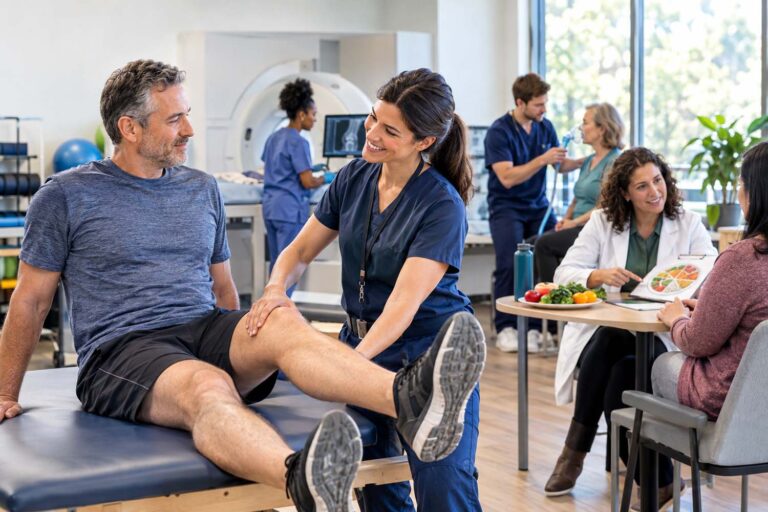
Not doctors, not nurses. The therapists, technologists, and technicians who make up most of the clinical care team, and a growing share of how people stay well.
Think back to the last time you or someone close to you needed real medical care. Odds are a doctor set the plan and a nurse managed the ward. But a lot of the hands-on work came from someone else entirely. Think of the person who ran the scan, guided the rehab, managed the breathing treatment, or built the nutrition plan. Those professionals belong to a broad field that quietly does much of modern healthcare, and it is expanding faster than almost any corner of medicine. Understanding what it is makes the whole system easier to navigate, and it explains a lot about how people actually recover, stay mobile, and keep feeling well.
What allied health actually is
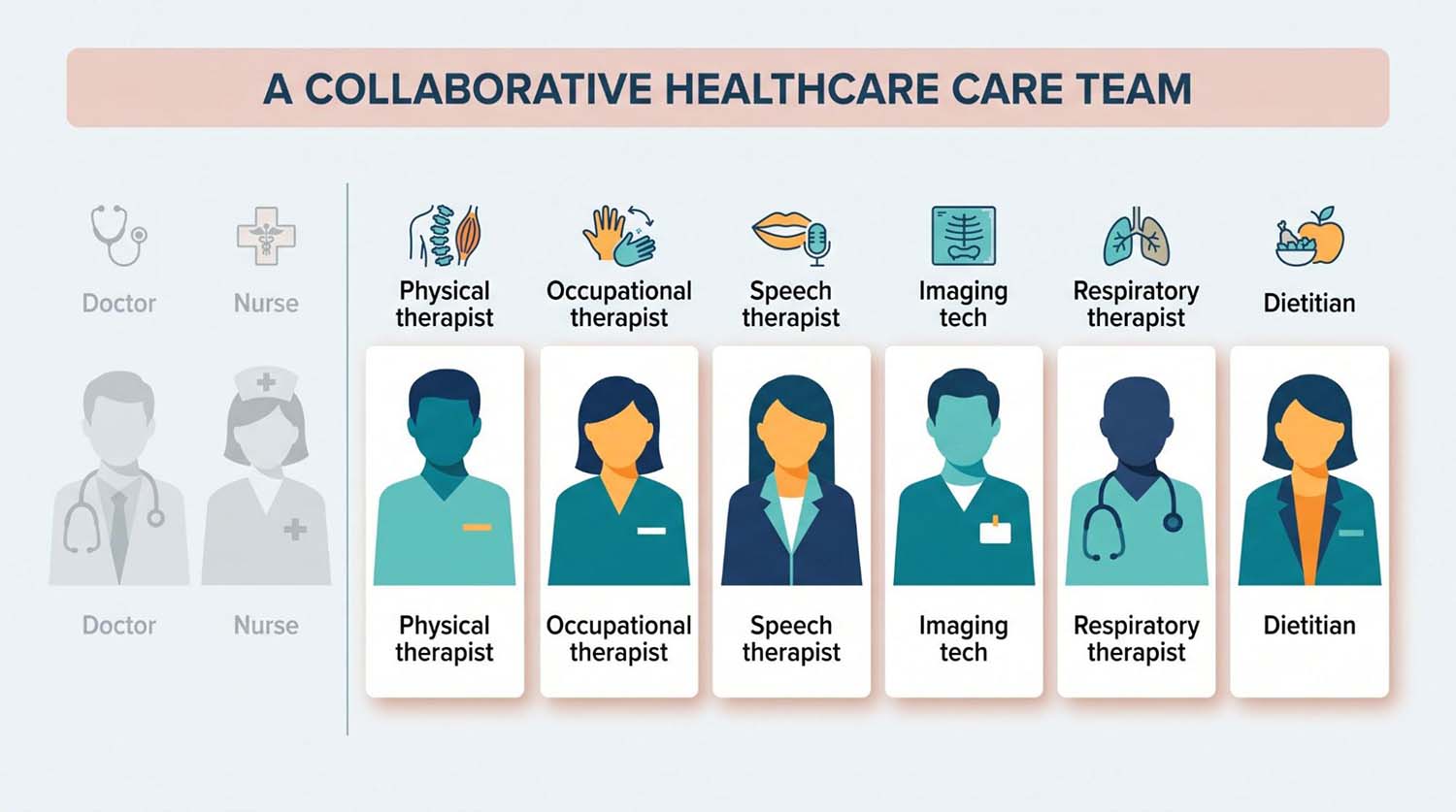 Beyond the doctor and the nurse, a broad team of therapists, technologists, and technicians delivers much of everyday care.
The term sounds technical, but the idea is simple. Allied health refers to the large group of licensed clinical professionals who are not physicians and not nurses, yet deliver a huge share of direct patient care. It includes physical, occupational, and speech therapists, radiology and imaging technologists, respiratory therapists, medical laboratory technicians, dietitians, and many more. Together these roles make up a majority of the healthcare workforce, which surprises most people the first time they hear it. Each one requires its own training, license, and scope of practice, and each handles a specific piece of care that a doctor or nurse typically does not. They are experts in movement, imaging, breathing, diagnostics, and nutrition, working alongside the rest of the team rather than beneath it. This kind of coordinated, professional approach to personal wellness is exactly what sets allied health apart from a DIY approach to staying healthy.
The allied health roles you actually encounter
Most people meet several of these professionals without ever registering the umbrella term that connects them. A twisted knee sends you to a physical therapist; a stroke recovery involves both occupational and speech therapists; a routine chest complaint might bring in an imaging technologist and a respiratory therapist on the same day. The table below lays out the roles you are most likely to encounter, what each one does in plain language, and the moment you tend to cross paths with them.
| Role | What they do | When you meet them |
| Physical therapist (PT) | Restore movement and manage pain | After an injury, surgery, or a mobility problem |
| Occupational therapist (OT) | Rebuild daily-living skills | During recovery from stroke, injury, or illness |
| Speech-language pathologist (SLP) | Treat speech, language, and swallowing | After a stroke, or for a child’s development |
| Imaging technologist | Run X-ray, CT, MRI, and ultrasound | Whenever a diagnosis needs a look inside |
| Respiratory therapist | Manage breathing and ventilators | During asthma, COPD, or a hospital stay |
| Registered dietitian | Build evidence-based nutrition plans | For diabetes, heart health, or weight goals |
Why allied health is growing so fast
Few fields are expanding as quickly, and the reasons are easy to follow. The population is aging, and older adults need far more rehabilitation, imaging, and chronic-condition management than any previous generation. Care is also shifting out of the hospital and into outpatient clinics, homes, and community settings, which multiplies the places these professionals are needed. At the same time, medicine keeps leaning harder on prevention and recovery rather than treatment alone, and that is exactly the territory allied health owns. Add a persistent shortage of trained clinicians, and demand outpaces supply almost everywhere. For anyone tracking where healthcare is headed, this field is one of the clearest signals, and it shapes how quickly people can actually get care.
How allied health shapes everyday wellness
Here is the part that matters most for daily life: this field is about far more than fixing what breaks. It is woven through the ordinary business of managing your health day to day. A physical therapist can correct the movement pattern behind recurring back pain before it becomes chronic, and the same principles behind staying fit at home often trace back to guidance a PT would give. A dietitian can turn a scary lab result into a manageable eating plan. A respiratory therapist can teach breathing techniques that make exercise possible again. The list below shows concrete ways these professionals support everyday wellness, well beyond the moments of acute crisis most people picture.
- Rehabilitating injuries so they heal fully instead of lingering for years.
- Managing chronic conditions like diabetes, asthma, and heart disease day to day.
- Restoring mobility and independence after surgery, stroke, or a long illness.
- Guiding nutrition in a way that is evidence-based rather than trend-driven.
- Preventing future problems by fixing movement, breathing, and diet patterns early.
The allied health field behind the scenes
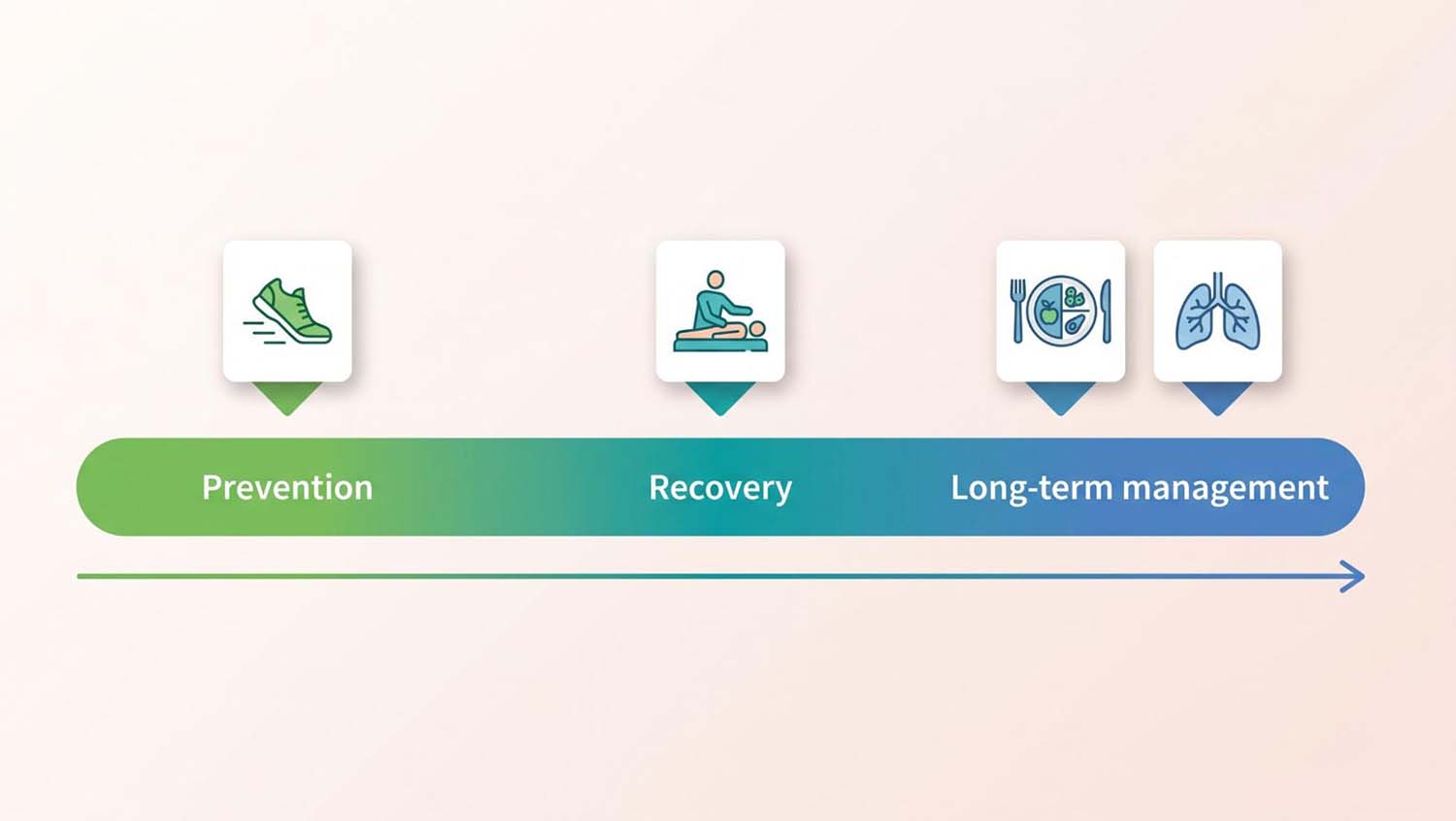 From rehab to prevention, allied health supports movement, breathing, and nutrition across everyday life.
Step back, and a clearer picture forms. Allied health is the quiet backbone of modern care, the large and growing group of experts who handle movement, imaging, breathing, diagnostics, and nutrition for nearly everyone who passes through the system. A few things are worth carrying away from all of this:

- It covers most of the clinical team beyond doctors and nurses, not a narrow niche.
- You meet it at real turning points: recovery, diagnosis, and everyday prevention.
- It is growing fast, which shapes how quickly anyone can actually get care.
Most people interact with the field far more than they realize, and they will lean on it even more as it keeps expanding and as the population continues to age. Knowing what it is, and who does what, turns a confusing web of titles into a team you can actually work with rather than a maze to get lost in. The next time a care plan hands you off to a therapist or a technologist, you will understand that you are not being sidelined. You are being connected to the people who do much of the real work of getting well and staying that way for the long run.

Better Living may earn commissions through affiliate links and may occasionally feature sponsored or partner content. If you make a purchase through our links, we may receive a small commission at no cost to you.