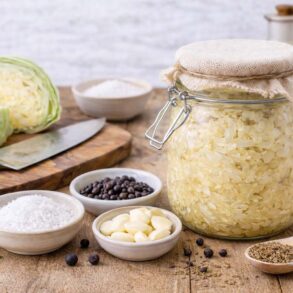
Easy Homemade Sauerkraut Recipe
Use fresh, dense cabbage for the best brine production.
Equipment
- Cutting board + sharp knife
- 1 quart mason jar or fermentation crock
- Fermentation weight (glass weight, small jar, or water‑filled bag)
- Cloth cover or airlock lid
Ingredients
- 1 medium green cabbage 2–3 lbs
- 1.5-2 tablespoons Sea Salt (DO NOT Use Iodized) 2–3% of cabbage weight
- Optional Add‑Ins:
- 1-2 teaspoons caraway seeds
- 1-2 cloves garlic sliced
- 1 tsp juniper berries
DIRECTIONS
- Prep the Cabbage: Remove outer leaves, quarter the cabbage, remove the core, and shred or slice thinly. A food processor fitted with a shredding attachment can make this really easy.
- Salt and Massage: Place cabbage in a large bowl. Sprinkle with salt and massage the cabbage with the salt for 5–10 minutes until it softens and releases enough liquid to form a brine.
- Pack the Jar: Transfer cabbage into your jar a handful at a time, pressing firmly to remove air pockets. Pour any remaining brine over the top. Add filtered water to cover the cabbage completely.
- Submerge the Cabbage Under the Brine: Add a fermentation weight or small glass jar to keep the cabbage fully submerged under the brine.
- Cover and Ferment: Cover with a cloth wrapped with a rubber band or airlock lid. Ferment at cool room temperature (65–72°F) for 1–4 weeks.
- Taste and store: Begin tasting after 7 days. When it reaches your preferred tanginess, transfer to the refrigerator to slow fermentation.
Notes
Tips and Troubleshooting
• 1½ tsp per pound ≈ 2% salt
• 2 tsp per pound ≈ 2.5% salt Both are correct (choose based on taste and texture):
• 2% (1½ tsp/lb): milder, faster ferment
• 2.5% (2 tsp/lb): firmer, crunchier, more mold‑resistant
- Cloudy brine is normal and a sign of active fermentation.
- Kahm Yeast (White/Gray Film) is Harmless. Scrape it off, clean the jar rim, and ensure cabbage stays submerged.
Mold (Black, Pink, Red, or Fuzzy) is Unsafe. Discard the entire batch. - Not Enough Brine?: Add a small amount of 2% saltwater brine (½ tsp salt per cup of water).
- Too Salty?: Rinse lightly before eating or use less salt next time.
Mushy Texture: Caused by low salt or warm temperatures. Keep the ferment cool and use 2–3% salt.
• 1½ tsp per pound ≈ 2% salt
• 2 tsp per pound ≈ 2.5% salt Both are correct (choose based on taste and texture):
• 2% (1½ tsp/lb): milder, faster ferment
• 2.5% (2 tsp/lb): firmer, crunchier, more mold‑resistant
Tried this recipe?Let us know how it was!